Nervelin Official Website › Blog › One Number, Nine Ingredients
One Number, Nine Ingredients: What A Blend Total Can Tell You
A proprietary blend declares a single weight for a group of ingredients. This one declares 1000mg for nine. That is not nothing — it is a real fact with real limits — and knowing exactly where those limits fall is the difference between reading a panel and guessing at one.
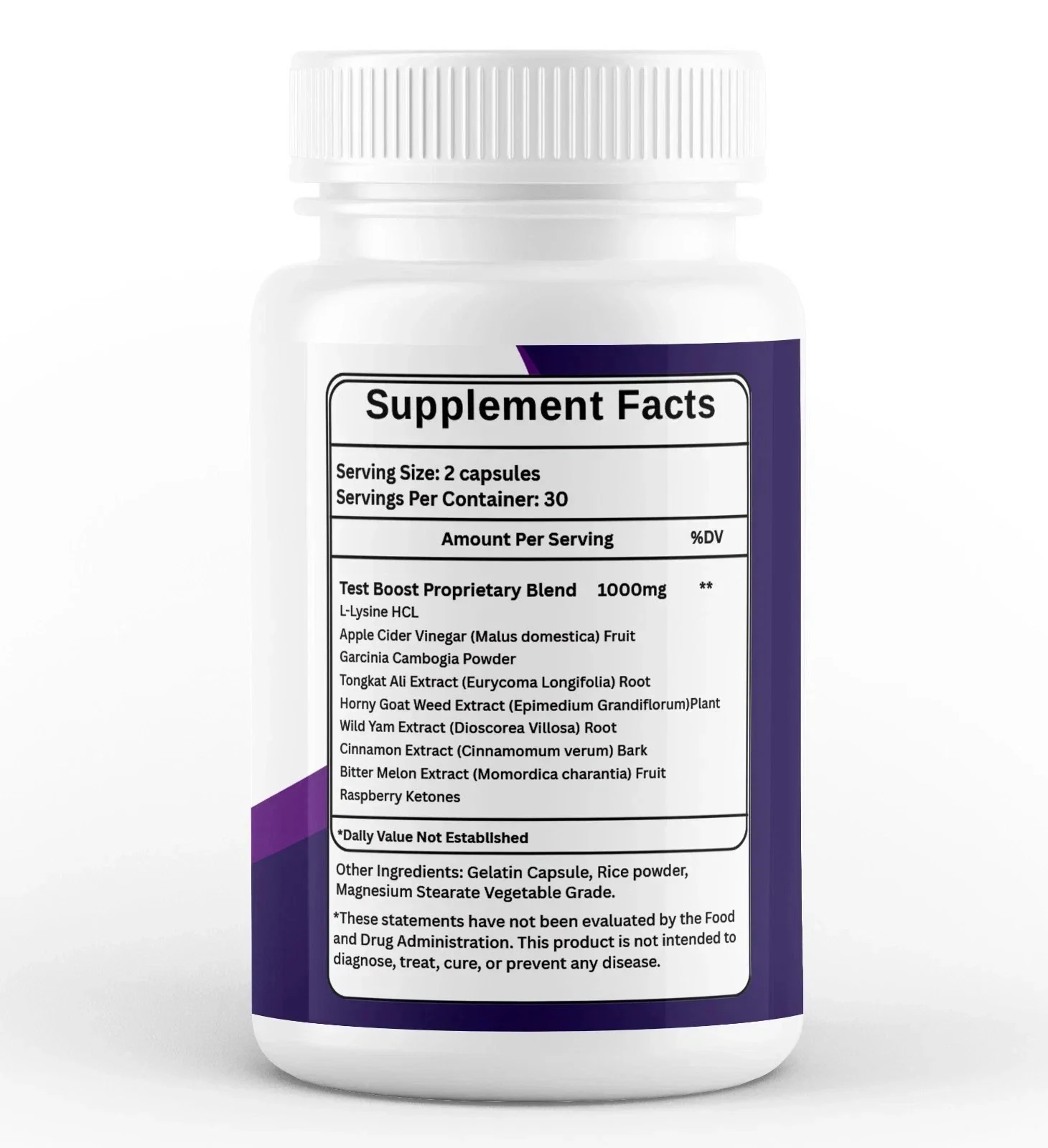
- One figure, 1000mg, covers all 9 ingredients on this panel.
- Ingredients in a blend are listed in descending order by weight, so the order is a ranking you can rely on.
- A ranking has no distances in it. First could be 40 per cent of the gram or 12 per cent.
- That makes every dose comparison against this label impossible, and it makes a comparison against a label that does print amounts possible.
- None of this is against the rules. It is a labelling choice the seller was entitled to make.
What a proprietary blend actually is
A Supplement Facts panel has two columns beside each ingredient: an amount per serving and a per cent Daily Value. A proprietary blend collapses the first column for a group of ingredients into a single line. The group gets a name, the group gets one weight, and the ingredients underneath get a list.
That is a permitted format rather than a loophole. The components have to be named, and they have to appear in descending order by weight, which is more than the front of a bottle ever tells you.
A 2026 paper on how shoppers read ingredient lists looks at what happens next. People fill the gap between what a list says and what it implies, usually generously, and the authors give that habit a name. The gap this panel leaves is nine ingredients wide.
What the seller is allowed to withhold
The reason blends exist at all is commercial: a formula that prints every amount can be copied by a competitor with a calculator. Whether that reason is good enough is a matter of opinion. Whether it is permitted is not, and it is.
The regulator's own questions and answers set out the wider frame: supplements are not reviewed for safety or effectiveness before sale, and the label is the seller's own statement rather than an approved document.
The one thing the order genuinely tells you
Descending order by weight is an obligation, not a convention, and it is the most useful piece of information on a blend row. Applied to this panel it says that L-lysine hydrochloride, printed first, weighs at least as much as any of the other eight, and that raspberry ketones, printed last, weigh no more than any of them.
Two real conclusions follow. The blend is not mostly raspberry ketones. And if you had a reason to care about the last ingredient on the list, this label has told you that it is the smallest thing in there.
Three things the order does not tell you:
- Whether first place is 40 per cent of the gram or 12 per cent of it.
- Whether the gap between first and second is enormous or a rounding difference.
- Whether any single ingredient reaches an amount that appears anywhere in its own research.
That third one is the one that matters for anybody comparing a bottle against a published trial, and it is the one the format is structurally unable to answer.
Four ways a gram can be divided
The clearest way to see the limit is to write out possibilities. Every row below is consistent with the printed panel, and nothing on the bottle distinguishes between them.
| A way 1000mg could be divided | First-listed ingredient | Last-listed ingredient | Is it allowed? |
|---|---|---|---|
| Roughly even | 111 mg | 111 mg | Yes |
| Front-loaded | 600 mg | 12 mg | Yes |
| Steeply front-loaded | 880 mg | 2 mg | Yes |
| A gentle taper | 220 mg | 40 mg | Yes |
Four arithmetic possibilities, all of them consistent with the same printed panel. None of them is a claim about this bottle; the point is that the label cannot rule any of them out.
Row three is the interesting one. A formula could be 88 per cent one ingredient and a dusting of the other eight, and the panel would look exactly as it looks now. So could row one. The label is compatible with both, which is another way of saying it decides neither.
This is not a suspicion about this particular product. It is a property of the format, and it holds for every proprietary blend on every shelf.
1000mg is a genuine, checkable declaration about the total weight of the actives in a two-capsule serving. Everything uncertain here is about the split, not about the sum.
Why an estimate would be worse than silence
It is tempting to divide by nine and publish the result. It would look like information, it would fill the column, and it would be wrong in a way no reader could detect.
An estimate printed in a table reads exactly like a measurement. A reader who takes 111 mg of Tongkat Ali away from a page has been handed a number that the bottle does not support and that this desk invented. That is worse than telling them the split is unknowable, because it is confidently worse.
So no page on this website prints a per-ingredient amount for this product. What the pages print instead is the dose each ingredient's own research used, in the condition it was studied in, attributed to the study rather than to the capsule. Those figures are real, they are checkable, and they transfer to any other label you pick up.
A figure this desk could not read is not printed, on any page, in any table. Where something is unknowable the site says so once, in the section whose job that is.
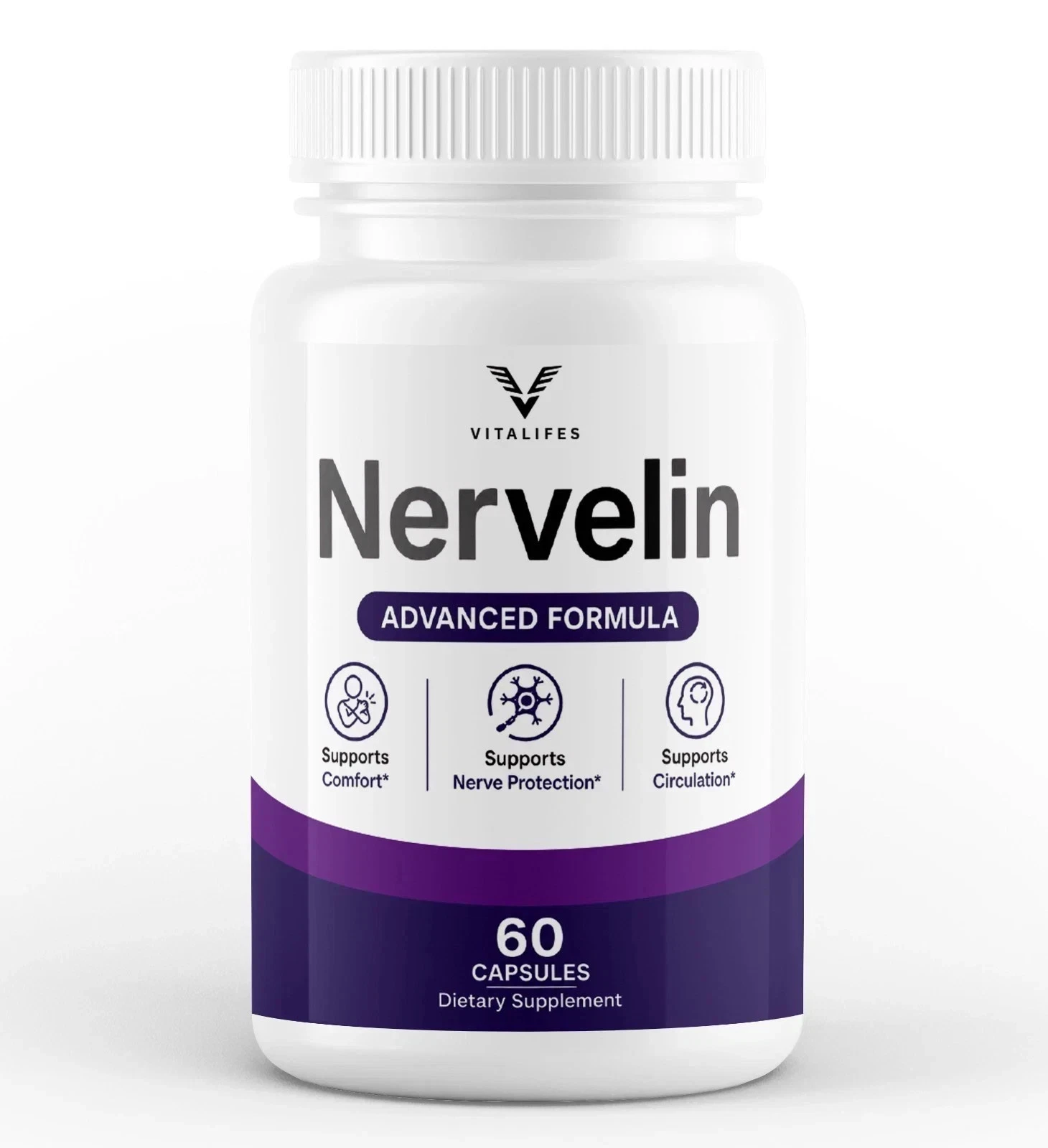
Nervelin: nine ingredients under one printed figure
Two capsules a day, 60 to a bottle. The panel is transcribed row by row on this site, and every ingredient is set beside the dose its own research used.
Two capsules a day · 60 capsules a bottle · price at the marketplace checkout
Order Nervelin On The Official WebsiteLot NER-26/GE-1959 · marketplace return window · gelatin capsule
What survives the missing column
A blend total removes one kind of information and leaves several others intact. It is worth listing what is still there, because the usual reaction to a blend is to conclude that the label says nothing, and that is not true.
| What the panel does tell you | What it does not | Why the difference matters |
|---|---|---|
| Nine ingredients are present | In what quantity | Presence is a yes or no; quantity is what research is measured in |
| They weigh 1000 mg together | How that gram is split | The split decides whether any single name is meaningful |
| They are listed heaviest first | By how much each outweighs the next | A ranking without distances cannot be turned into amounts |
| The serving is two capsules | How much of the capsule is the blend | Rice powder and the shell are declared separately and carry no weight |
Read left to right and the panel is informative. Read down the middle column and it is silent on the one question a dose comparison needs.
Two of those surviving facts are genuinely useful. Knowing which nine ingredients are present lets you check each one against its own literature and against anything you already take. Knowing the serving size lets you do the month arithmetic that decides what a bottle actually costs per day.
What does not survive is the comparison a careful shopper most wants to make: this ingredient, at this amount, against the amount that was studied. On this panel that comparison cannot be made in either direction.
Using this in a shop, on any bottle
The practical version of everything above fits into five steps and needs nothing but the bottle in your hand.
- Turn it over. The front is marketing; the panel on the back is the regulated part.
- Look for amounts in the right-hand column rather than names in the left one.
- If you find a blend line, note its total and count the names under it. That ratio is the whole story.
- Read the order as a ranking and nothing more. First is the biggest; that is all it says.
- Check the serving size against the capsule count, so you know how many days the bottle is.
Run that on two bottles and the comparison stops being a matter of impression. One may print amounts; one may not; and you will know which is which in under a minute.
NCCIH's guidance on using supplements wisely and the NIH Office of Dietary Supplements both publish the same advice in longer form, and both are worth ten minutes before a first purchase in any category.
What a blend total is not evidence of
It would be easy to end this by implying that a blend is a red flag, and that would be neither fair nor accurate. A blend total tells you about a labelling decision. It tells you nothing about what is in the capsule, who made it or whether it was made carefully.
There are products with fully declared panels that contain very little of anything useful, and there are blends that are generous. The format does not sort them.
The published analysis of FDA supplement warnings is about a different problem entirely — products found to contain pharmaceutical ingredients their labels never declared — and it is worth separating the two. A blend is a disclosure choice. An undeclared drug is a different category of failure.
- The panel is silent on amounts, and silence is not a claim about quality.
- The nine names are real information and can each be read against their own literature.
- A label that prints amounts gives you more to work with, which is a reason to prefer one, not a reason to condemn the other.
The next article in this series takes the other side of the same question: what the controlled trials in this condition actually used, and what those figures look like beside a label of any kind.
References
- Alsawadi A. The Perception Filler: A Proposed Conceptual Framework for Ingredient-Interpretation Gaps in Food Supplements. J Nutr. 2026;156(10):101803. PMID 42660500. https://pubmed.ncbi.nlm.nih.gov/42660500/
- Questions and Answers on Dietary Supplements. U.S. Food and Drug Administration. https://www.fda.gov/food/information-consumers-using-dietary-supplements/questions-and-answers-dietary-supplements
- Dietary Supplements: What You Need to Know. Office of Dietary Supplements, National Institutes of Health. https://ods.od.nih.gov/factsheets/WYNTK-Consumer/
- Using Dietary Supplements Wisely. National Center for Complementary and Integrative Health, National Institutes of Health. https://www.nccih.nih.gov/health/using-dietary-supplements-wisely
- Tucker J, Fischer T, Upjohn L, et al. Unapproved Pharmaceutical Ingredients Included in Dietary Supplements Associated With US Food and Drug Administration Warnings. JAMA Netw Open. 2018;1(6):e183337. PMID 30646238. https://pubmed.ncbi.nlm.nih.gov/30646238/