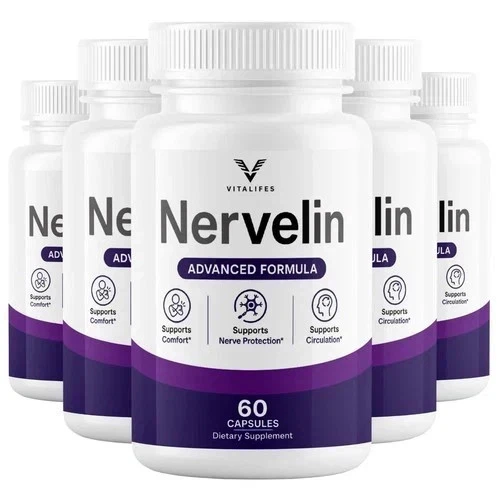
Nervelin Official Website › Guides
GuidesNerve Supplement Guides
Two long guides sit behind this page. The first is the category’s evidence base: the four things with controlled trials in peripheral neuropathy, the dose each trial used, and the vitamin that causes the symptom at the wrong amount. The second is a scoring method you can run on any label in a shop.
What each guide covers, who it is for, and which of the product pages answers a question faster.
The two guides, and what each one settles
Two pieces, roughly two thousand words each, and what each of them is for.
The nerve supplement guide
The evidence base for the whole category, written for somebody standing in front of a shelf. Four ingredients with controlled trials and the dose each used; the guidelines’ position on supplements; the vitamin whose excess causes neuropathy; and what a work-up actually involves.
Choosing a nerve supplement
Eight checks you can run on any bottle in a shop in about two minutes, each scored, with a worked total at the end. The last section runs the same eight on the product this website sells and prints the result without softening it.
They are written to be read in that order but they stand alone. The first is about what the research supports; the second is about what a label tells you before you have read any research at all.
Neither is about this product until the second one reaches its last section, which is deliberate. A guide that argues its way to a purchase is an advertisement with subheadings, and it is worth nothing to somebody trying to decide.
Why a retail desk publishes the unflattering version
What it costs to publish a guide that scores your own product, and why it is still the right trade.
These guides were written knowing what they would conclude. The four ingredients with controlled trials in this condition are not on the label this website sells, and the second guide scores that label in the open.
The reason to publish anyway is simple arithmetic about trust. A reader who finds the inconvenient fact here rather than somewhere else has a reason to believe the convenient ones too, and a reader who finds it somewhere else has a reason to believe nothing on this site.
There is a commercial relationship behind all of it and it is stated on every page: Getnervelin is paid when an order goes through the checkout link. The about page sets out the method and what this desk will not publish.
What these guides contain
- Every dose in these guides is the one a named trial used, with the trial cited.
- Every citation was fetched and confirmed rather than remembered.
- The guidelines are quoted on what they say about supplements, including where that is nothing.
- The scoring method is published before it is applied, so the result cannot be reverse-engineered.
What they will not contain
- No claim that any supplement treats neuropathy. None of them does.
- No dose invented for an ingredient whose research has not established one.
- No comparison against a competitor product by name.
- No suggestion that reading a guide replaces being assessed properly.
Six questions worth answering before you buy anything in this aisle
A short version of both guides, for somebody standing in a shop rather than sitting down to read.
Has anyone looked at the symptoms yet?
Several causes of numbness and tingling are identifiable with ordinary tests and some of them respond to treating the cause. A year of capsules taken instead of finding out which one you have is a year spent not treating something treatable.
Does the bottle carry any of the four trialled ingredients?
Alpha-lipoic acid, benfotiamine, acetyl-L-carnitine, and B12 where a medicine has depleted it. Those four have controlled trials in peripheral neuropathy; nothing else on this shelf does.
Can you read an amount for each ingredient?
A blend total means the answer is no, and no amount of reading will change that. It is not a disqualification, and it does mean the research comparison cannot be made in either direction.
Is B6 on the panel, and at what amount?
High supplemental B6 sustained over time produces the sensory neuropathy this whole aisle is sold against. It is the one ingredient here with a documented capacity to cause the symptom, and most shoppers have never been warned.
How many days is the bottle, actually?
Capsules per bottle divided by capsules per serving. A ninety-capsule bottle taken three a day is a month, not a quarter, and the front of the pack rarely makes that arithmetic for you.
What does it cost per day at that rate?
The only comparison that survives between two products with different capsule counts and different servings. It is also the figure that decides whether a six-bottle pack is a saving or a commitment.
The first question is deliberately first. Everything else on this page assumes it has been settled, and the answers to the other five are worth much less while it has not.
Questions two to four come from the nerve supplement guide and questions five and six from the scoring card. Both are linked at the top of this page and both run to roughly two thousand words, which is the version to read when you are not deciding this afternoon.
A short glossary for a nerve supplement shelf
Eight terms you will meet on a label or in the research behind it, with what each one is actually asserting.
| The word on the label | What it actually means | Why it matters while you shop |
|---|---|---|
| Proprietary blend | A group of ingredients declared as one total weight, listed in descending order | One figure for several ingredients, so no single amount can be read |
| Standardised extract | An extract prepared to contain a stated share of a marker compound | Meaningless without a weight beside it: a percentage of nothing is nothing |
| Structure/function claim | A permitted claim that an ingredient supports a body structure or function | “Supports” is the giveaway. Treatment claims are not allowed here |
| Daily Value | The reference intake a nutrient is measured against on a panel | A botanical has none, which is why most rows on this shelf print a dagger |
| Other ingredients | Everything in the capsule that is not an active: shell, flow agents, fillers | This is where gelatin, rice powder and magnesium stearate are declared |
| Facility registered | The factory has filed its details with the regulator | A statement about a building, not a judgement about a capsule |
| Peripheral neuropathy | Damage to the nerves outside the brain and spinal cord | The condition this whole aisle is sold against, and it has many causes |
| Distal symmetric | Starting furthest from the centre, and on both sides at once | The classic pattern: toes first, both feet, working upwards |
Eight terms, six of which appear somewhere on the bottle this website sells.
The first two rows do most of the work. Between them they cover the commonest way a panel can look informative and answer nothing: a blend total with no split, or a percentage with no weight to take a percentage of.
The fourth row is the one that surprises people. A botanical has no Daily Value because no reference intake has been established for it, so the dagger against those rows is not evasion — it is the only honest mark available. The rows worth questioning are the ones that could have carried a figure and did not.
The last two rows are there because the words on the front of a bottle and the words a clinician uses are not the same vocabulary, and a shopper reading research for the first time meets both in the same afternoon.
When a product page answers faster than a guide
Six questions with a faster answer elsewhere on this site, with roughly how long each takes.
| What you actually want to know | The page that answers it | Reading time |
|---|---|---|
| What is in the bottle, name by name | The ingredients page | Eight minutes |
| What the panel prints, exactly | The panel page | Four minutes |
| Whether anything here interacts with a medicine | The side-effects page | Seven minutes |
| How long to give it before judging | The timeline page | Five minutes |
| What the label is allowed to claim | The claims page | Six minutes |
| Thirty-six short answers in one place | The FAQ | As long as you like |
The guides are the slower read. They are worth the time when you are deciding whether to buy anything in this aisle rather than which one.
One distinction is worth holding on to while reading any of it. A dose from a trial tells you what was tested and what happened. It does not tell you what is in a capsule in front of you, and on a label that declares a blend total it cannot.
That is the situation on this particular bottle: 1000mg for 9 ingredients together and no second figure anywhere on the panel. The guides explain what that does to a comparison, and the panel page shows the row it comes from.
Sources behind these guides
The plain-language references and the clinical review the two guides are built on.
- Peripheral Neuropathy. MedlinePlus, National Library of Medicine. https://medlineplus.gov/peripheralnervedisorders.html
- Callaghan BC, Price RS, Feldman EL. Distal Symmetric Polyneuropathy: A Review. JAMA. 2015;314(20):2172-81. PMID 26599185. https://pubmed.ncbi.nlm.nih.gov/26599185/
- Using Dietary Supplements Wisely. National Center for Complementary and Integrative Health, National Institutes of Health. https://www.nccih.nih.gov/health/using-dietary-supplements-wisely
- Dietary Supplements: What You Need to Know. Office of Dietary Supplements, National Institutes of Health. https://ods.od.nih.gov/factsheets/WYNTK-Consumer/
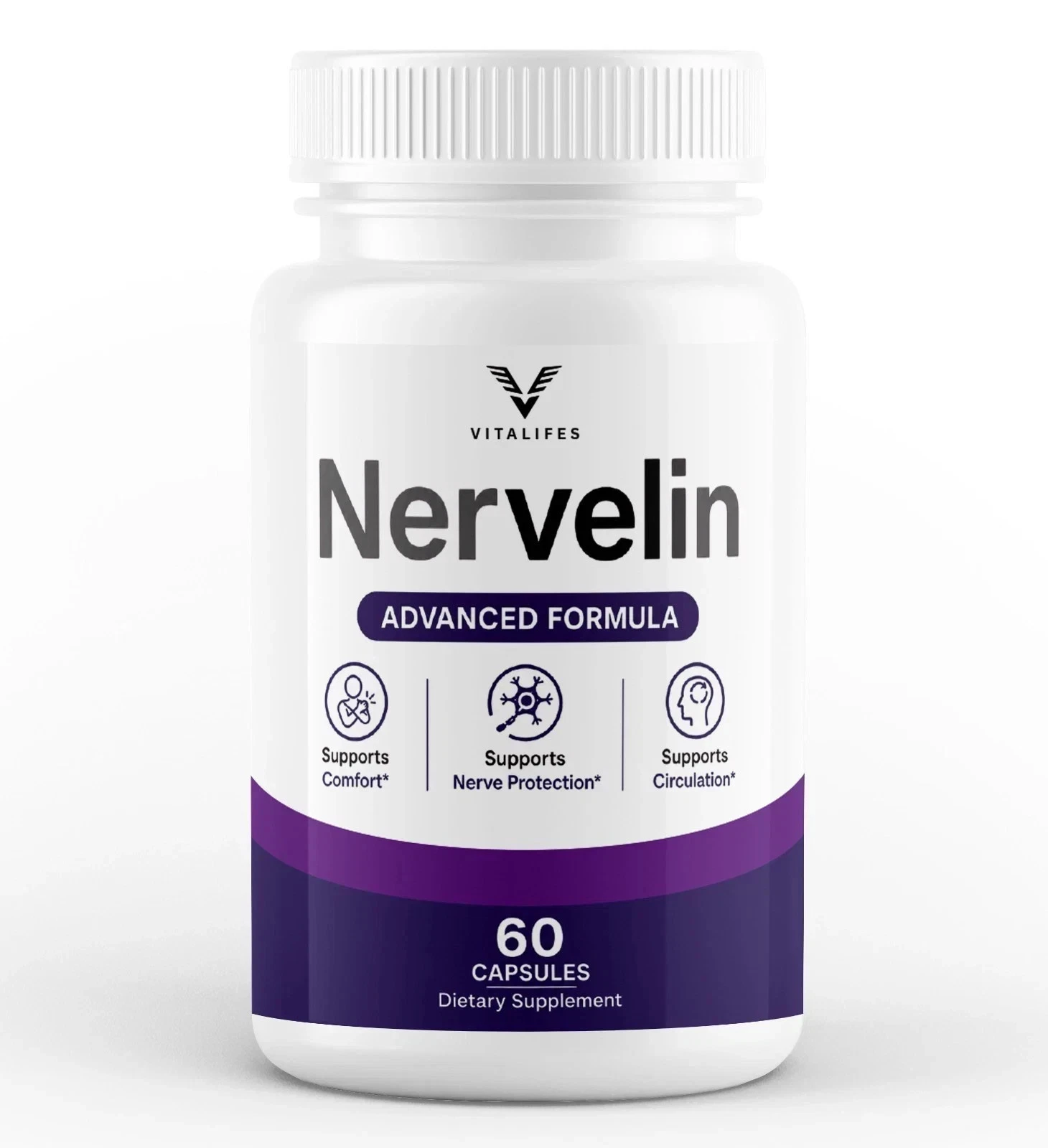
Read the guides first, then decide about Nervelin
Nine ingredients transcribed from the printed panel, each set beside the dose its own research used, and a scoring guide that runs its own method on this bottle in public.
Two capsules a day · 60 capsules a bottle · price at the marketplace checkout
Order Nervelin On The Official WebsiteLot NER-26/GE-1959 · marketplace return window · gelatin capsule