Nervelin Official Website › Ingredients
IngredientsNervelin Ingredients
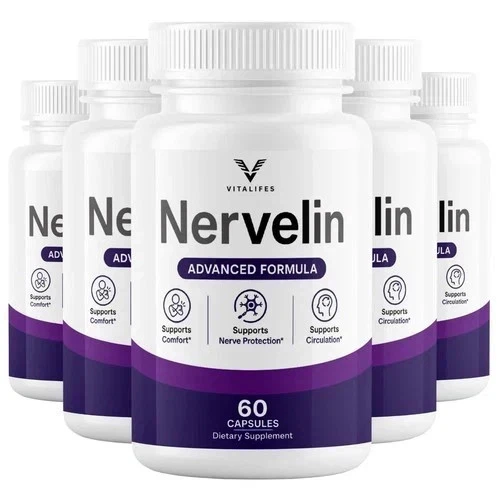
Nine ingredients are printed on the Nervelin panel, in descending order by weight, under one heading that carries 1000mg for all of them together.
L-lysine leads the list and raspberry ketones close it, with apple cider vinegar, Garcinia cambogia, Tongkat Ali, horny goat weed, wild yam, Ceylon cinnamon and bitter melon between them. Two capsules is one serving.
Every name on the panel, where it comes from, and what its own research used.
What does the order of the Nervelin panel tell you?
A rule about print order, and the two conclusions it genuinely supports.
Ingredients inside a proprietary blend are printed in descending order by weight, and reading that order as a ranking is the most this list can honestly give.
L-lysine is therefore the heaviest of the nine and raspberry ketones the lightest. Two bottles could both obey that rule and split the same gram completely differently, which is why a ranking compares rows with each other and never with a trial.
It does rule things out. Raspberry ketones cannot be the bulk of this capsule and L-lysine cannot be a trace. Those are the only two conclusions the panel supports without a further figure. Work on how shoppers read ingredient lists found that print order is read as a ranking by almost everybody, which makes it worth saying plainly that a ranking is exactly what it is.
What are the nine Nervelin ingredients?
Nine cards, each opening with the kitchen, the garden or the pharmacy the ingredient comes from.
Nine rows, in the bottle’s own order. Each card says where you would meet the ingredient outside a capsule and what its published research is about.
L-Lysine HCL
an essential amino acid, first rowHeaviest of the nineMost people meet lysine at dinner rather than in a capsule: it is one of the nine amino acids a human body cannot build for itself, and a chicken breast, a tin of sardines or a bowl of lentils supplies grams of it. The hydrochloride form on this row is the ordinary supplement salt, chosen because it stays dry in a powder. Its clinical file is narrow and old. A 1980 crossover study gave 1,000 mg a day and counted fewer cold sore recurrences; a 1984 trial gave 400 mg three times daily and counted nothing. Cochrane read the field in 2015 and called the evidence insufficient, and a 2023 review of amino-acid upper intakes covers how much is sensible.
Apple Cider Vinegar (Malus domestica) Fruit
fruit, second rowSecond by weightThe kitchen bottle, dried onto a carrier and pressed into a capsule. The vinegar literature is built on acetic acid delivered as liquid, in volumes a spoon measures: the 2025 meta-analysis of randomised trials in people with type 2 diabetes or excess weight describes an intake near 30 mL a day, an eight-week trial of red wine vinegar improved glucose handling without shifting body fat, and a network comparison of six herbal agents ranked vinegar against its neighbours. A capsule delivers the acid in a fraction of the volume and none of the liquid.
Garcinia Cambogia Powder
Malabar tamarind, fruit rind, third rowThird by weightA sour, pumpkin-shaped fruit used as a souring agent in Kerala cooking long before anyone dried the rind for weight-loss capsules. The compound behind the reputation is hydroxycitric acid. The best-known randomised trial put 135 people on 1,500 mg of it a day for twelve weeks and found no separation from placebo on fat mass; a later trial in obese women reported a lipid effect and a crossover study measured appetite directly. This is also the one row on the panel that carries a safety literature of its own: a Drug-Induced Liver Injury Network series, a report that reached acute liver failure, a case that reached transplantation and a 2019 report in the same pattern, with a standing LiverTox chapter and an NCCIH summary. Side effects takes that record in full.
Tongkat Ali Extract (Eurycoma Longifolia) Root
Eurycoma longifolia, root, fourth rowFourth by weightA Southeast Asian root, boiled as a bitter tonic in Malaysia and Indonesia, and the row with the tidiest modern trial record on this panel. The trials that matter used a standardised hot-water root extract and published their amounts: a twelve-week trial at 100 or 200 mg a day, a six-month trial in older men at 200 mg a day, a trial in younger men and a four-week study of stress hormones. Those outcomes are hormonal and psychological rather than neurological. Carry the 100 to 200 mg figure to any label naming this root.
Horny Goat Weed Extract (Epimedium Grandiflorum) Plant
Epimedium, aerial parts, fifth rowFifth by weightA woodland perennial grown in gardens across Europe and North America as barrenwort, and used in Chinese herbal practice for centuries. Its interesting molecule is icariin, a flavonoid glycoside. A 2024 survey of the genus sets out the chemistry, and a review of icariin describes the enzyme it is proposed to act on. What the literature has never produced is a controlled human trial fixing a daily amount, so no figure appears in this paragraph.
Wild Yam Extract (Dioscorea Villosa) Root
Dioscorea villosa, root, sixth rowSixth by weightA climbing vine of the American south-east whose tuber gave twentieth-century chemists diosgenin, the starting material they used to manufacture steroid hormones in a factory. That reaction needs laboratory conditions, and a human body does not run it at all, which is the most useful fact about this row and the one most often left out. The one controlled trial tested a wild yam cream against placebo in women with menopausal symptoms and separated from nothing, and a 2024 survey of the genus covers what the plants contain.
Cinnamon Extract (Cinnamomum verum) Bark
Cinnamomum verum, bark, seventh rowSeventh by weightQuills of inner bark from a Sri Lankan tree, and the best piece of labelling on the whole panel. Naming Cinnamomum verum distinguishes true cinnamon from the cassia that fills most supermarket jars, and the distinction is chemical rather than cosmetic: a survey that measured both found coumarin content differing by orders of magnitude between them, and the human risk assessment with its absorption study are both written about cassia. On glucose, a 2024 dose-response analysis and the meta-analysis that logged the range put the trials between 120 mg and 6 g a day over four to eighteen weeks, while Cochrane and NCCIH both read the same evidence more coolly.
Bitter Melon Extract (Momordica charantia) Fruit
Momordica charantia, fruit, eighth rowEighth by weightA ridged green gourd eaten as a vegetable from Kerala to the Philippines, stir-fried with egg or stuffed and braised, and bitter enough that most people meet it as food before they meet it as a supplement. Its research is almost entirely about blood glucose. A three-month trial used 2,000 mg a day and measured insulin secretion, a comparison study set 2 g and 4 g a day against a sulfonylurea, a 2019 pooled analysis collected the trials in which glucose fell, and Cochrane judged the field too thin to recommend. Grams a day is the unit that literature works in.
Raspberry Ketones
rheosmin, ninth rowLightest of the nineThe aroma compound that makes a raspberry smell like a raspberry, made industrially for flavour and fragrance and sold as a supplement on the strength of laboratory work. The mouse experiment behind it, the fat-cell work and the follow-up in the same cell line are the whole case, and none of the three involved a person. The nearest human study tested a mixed supplement that changed several variables at once, so nothing in its result belongs to the ketones specifically.
How precisely does the Nervelin label name each ingredient?
Four tests of naming, applied to all nine rows, before any question of amount.
Naming precision is separate from dosing and can be graded without any figures at all. Four things make a row readable: the common name, the binomial, the plant part and a standardisation marker.
| Row | Binomial printed | Plant part printed | Standardisation marker |
|---|---|---|---|
| L-Lysine HCL | Not applicable, it is a defined compound | Not applicable | The salt form is named, which is the equivalent |
| Apple cider vinegar | Malus domestica | Fruit | None given |
| Garcinia cambogia | Given as the common binomial | Powder, part unstated | None, and the hydroxycitric acid content is the figure that would matter |
| Tongkat Ali | Eurycoma Longifolia | Root | None, and the trials used one |
| Horny goat weed | Epimedium Grandiflorum | Plant | None given |
| Wild yam | Dioscorea Villosa | Root | None given |
| Cinnamon | Cinnamomum verum | Bark | None, though the species does the work here |
| Bitter melon | Momordica charantia | Fruit | None given |
| Raspberry ketones | Not applicable, it is a defined compound | Not applicable | None given |
Read off the printed panel. The capitalisation in the second column is the label’s own.
Seven of the nine print a binomial and six print a plant part, which puts this panel ahead of a good deal of the shelf. The Garcinia row is the weakest on this measure and the cinnamon row is the strongest: naming Cinnamomum verum answers the one question a careful buyer has about cinnamon before they ask it.
No row carries a standardisation marker, which matters most on Tongkat Ali, where the trial extract is defined by how it was made. A row can be named well and still leave its strength open, and this panel does both at once.
What else is inside a Nervelin capsule?
Three entries under the panel, and the first one governs who can take this at all.
Three lines account for everything that is not part of the blend: gelatin capsule, rice powder, magnesium stearate vegetable grade.
Gelatin, the shell
A two-piece capsule made from animal collagen. It dissolves in minutes, holds a botanical powder dry and carries no taste. It also answers a question some buyers ask first: these capsules suit neither a vegetarian nor a vegan diet, and no halal or kosher assurance ships with them. Who it is for works through who that rules out.
Rice powder, the filler
Bulk, and the reason a capsule of this size fills to a consistent weight. Rice powder is inert and gluten-free, and it does the same job here as on most of the shelf.
Magnesium stearate, vegetable grade
A flow agent, present in fractions of a per cent, that stops powder sticking to the machine filling the capsules. Vegetable grade means the stearic acid came from a plant source, which the gelatin shell then makes moot for anyone avoiding animal products.
What would make each Nervelin row checkable?
Nine rows, and exactly what each one would need for a buyer to hold it to account.
A row is checkable when a reader can set what the bottle gives them beside what a published trial used. That needs one figure from each side. The literature side is filled in for all nine on this page; the label side has a single entry, 1000mg, and it belongs to the heading rather than to any row.
| Row | The figure its own research used | What this label would need to print |
|---|---|---|
| L-Lysine HCL | 1,000–1,200 mg a day in the trial that found an effect; 400 mg three times daily in the one that did not | Milligrams of lysine |
| Apple Cider Vinegar | About 30 mL a day of liquid vinegar, for up to twelve weeks | Millilitres of vinegar equivalent, or the acetic acid content |
| Garcinia Cambogia | 1,500 mg a day of hydroxycitric acid for twelve weeks, which did not beat placebo | Milligrams of hydroxycitric acid, not of rind powder |
| Tongkat Ali | 100 or 200 mg a day of a standardised root extract, over twelve weeks to six months | Milligrams of extract, plus the standardisation the trials used |
| Horny Goat Weed | No controlled human trial establishes a daily amount | A researched daily amount would need to exist first |
| Wild Yam | One controlled trial of a topical cream, which found no difference from placebo | Milligrams, and whether it is intended orally at all |
| Cinnamon (Cinnamomum verum) | 120 mg a day to 6 g a day, across four to eighteen weeks | Milligrams of bark extract |
| Bitter Melon | 2,000 mg a day for three months; other arms at 2 g and 4 g a day | Grams of fruit extract |
| Raspberry Ketones | No human trial of the ingredient on its own | A human dose would have to exist first |
The middle column is read off the published trials. The right-hand column is what a panel would have to carry for the two to be compared.
Seven of the nine could be made checkable tomorrow by printing a number. Two could not: horny goat weed and raspberry ketones have no controlled human dose to be checked against, so a figure would tell a reader what they are swallowing without telling them whether it is enough. A missing number and a missing literature are two different problems, and only the first is the maker’s to fix.
1000mg is one gram shared nine ways at most. If a single ingredient is your reason for buying, compare this label against others before settling on it.
Nervelin ingredient questions
How many ingredients does Nervelin contain?
Nine under the blend heading, plus three inactive lines: gelatin capsule, rice powder, magnesium stearate vegetable grade. The blend heading carries 1000mg for all nine together.
Which ingredient is present in the largest amount?
L-lysine hydrochloride. A proprietary blend lists its contents in descending order by weight, so the first row outweighs the other eight. How much it outweighs them by is not printed.
Is the cinnamon cassia or Ceylon?
Ceylon. The row prints Cinnamomum verum, which is true cinnamon and the low-coumarin species. The coumarin cautions people have read about are written about cassia.
Why is there no amount beside each ingredient?
The nine sit inside one proprietary blend, and the rule for a blend is an ingredient list in descending order by weight plus a single total. This one gives both. No per-ingredient figure exists, and none is estimated anywhere on this website.
Is the Garcinia cambogia a problem?
It carries a liver-injury literature, including cases that reached acute failure and one that reached transplantation, against very wide use. Anyone with liver disease or taking a medicine with known liver effects should raise this product before starting it. Side effects sets out the papers.
Does the ingredient list suit a vegetarian diet?
No. The shell is gelatin, which is animal-derived. The two other inactive lines, rice powder and vegetable-grade magnesium stearate, are both plant-sourced, but the shell settles the question.
Are any of the nine studied for nerve symptoms?
None of them has a controlled human trial in peripheral neuropathy. Each has a research file in something else, and this page prints the dose those studies used. How it works covers what the neuropathy trials did use.
Sources for the Nervelin ingredient list
Grouped by ingredient, in the order the panel prints them.
- Milman N, Scheibel J, Jessen O. Lysine prophylaxis in recurrent herpes simplex labialis: a double-blind, controlled crossover study. Acta Derm Venereol. 1980;60(1):85-7. PMID 6153847. https://pubmed.ncbi.nlm.nih.gov/6153847/
- DiGiovanna JJ, Blank H. Failure of lysine in frequently recurrent herpes simplex infection. Treatment and prophylaxis. Arch Dermatol. 1984;120(1):48-51. PMID 6419679. https://pubmed.ncbi.nlm.nih.gov/6419679/
- Chi CC, Wang SH, Delamere FM, et al. Interventions for prevention of herpes simplex labialis (cold sores on the lips). Cochrane Database Syst Rev. 2015;2015(8):CD010095. PMID 26252373. https://pubmed.ncbi.nlm.nih.gov/26252373/
- Elango R. Tolerable Upper Intake Level for Individual Amino Acids in Humans: A Narrative Review of Recent Clinical Studies. Adv Nutr. 2023;14(4):885-894. PMID 37062432. https://pubmed.ncbi.nlm.nih.gov/37062432/
- Castagna A, Ferro Y, Noto FR, et al. Effect of Apple Cider Vinegar Intake on Body Composition in Humans with Type 2 Diabetes and/or Overweight: A Systematic Review and Meta-Analysis of Randomized Controlled Trials. Nutrients. 2025;17(18). PMID 41010525. https://pubmed.ncbi.nlm.nih.gov/41010525/
- Jasbi P, Baker O, Shi X, et al. Daily red wine vinegar ingestion for eight weeks improves glucose homeostasis and affects the metabolome but does not reduce adiposity in adults. Food Funct. 2019;10(11):7343-7355. PMID 31647087. https://pubmed.ncbi.nlm.nih.gov/31647087/
- Kumar S, Sharma SK, Mudgal SK, et al. Comparative effectiveness of six herbs in the management of glycemic status of type 2 diabetes mellitus patients: A systematic review and network meta-analysis of randomized controlled trials. Diabetes Metab Syndr. 2023;17(8):102826. PMID 37451111. https://pubmed.ncbi.nlm.nih.gov/37451111/
- Heymsfield SB, Allison DB, Vasselli JR, et al. Garcinia cambogia (hydroxycitric acid) as a potential antiobesity agent: a randomized controlled trial. JAMA. 1998;280(18):1596-600. PMID 9820262. https://pubmed.ncbi.nlm.nih.gov/9820262/
- Vasques CA, Schneider R, Klein-Junior LC, et al. Hypolipemic effect of Garcinia cambogia in obese women. Phytother Res. 2014;28(6):887-91. PMID 24133059. https://pubmed.ncbi.nlm.nih.gov/24133059/
- Mattes RD, Bormann L. Effects of (-)-hydroxycitric acid on appetitive variables. Physiol Behav. 2000;71(1-2):87-94. PMID 11134690. https://pubmed.ncbi.nlm.nih.gov/11134690/
- Vuppalanchi R, Bonkovsky HL, Ahmad J, et al. Garcinia cambogia, Either Alone or in Combination With Green Tea, Causes Moderate to Severe Liver Injury. Clin Gastroenterol Hepatol. 2022;20(6):e1416-e1425. PMID 34400337. https://pubmed.ncbi.nlm.nih.gov/34400337/
- Corey R, Werner KT, Singer A, et al. Acute liver failure associated with Garcinia cambogia use. Ann Hepatol. 2016;15(1):123-6. PMID 26626648. https://pubmed.ncbi.nlm.nih.gov/26626648/
- Lunsford KE, Bodzin AS, Reino DC, et al. Dangerous dietary supplements: Garcinia cambogia-associated hepatic failure requiring transplantation. World J Gastroenterol. 2016;22(45):10071-10076. PMID 28018115. https://pubmed.ncbi.nlm.nih.gov/28018115/
- Yousaf MN, Chaudhary FS, Hodanazari SM, et al. Hepatotoxicity associated with Garcinia cambogia: A case report. World J Hepatol. 2019;11(11):735-742. PMID 31772720. https://pubmed.ncbi.nlm.nih.gov/31772720/
- Garcinia Cambogia. In: LiverTox: Clinical and Research Information on Drug-Induced Liver Injury. Bethesda (MD): National Institute of Diabetes and Digestive and Kidney Diseases. https://www.ncbi.nlm.nih.gov/books/NBK548087/
- National Center for Complementary and Integrative Health. Garcinia Cambogia. https://www.nccih.nih.gov/health/garcinia-cambogia
- Chinnappan SM, George A, Pandey P, et al. Effect of Eurycoma longifolia standardised aqueous root extract-Physta on testosterone levels and quality of life in ageing male subjects: a randomised, double-blind, placebo-controlled multicentre study. Food Nutr Res. 2021;65. PMID 34262417. https://pubmed.ncbi.nlm.nih.gov/34262417/
- Leitao AE, Vieira MCS, Pelegrini A, et al. A 6-month, double-blind, placebo-controlled, randomized trial to evaluate the effect of Eurycoma longifolia (Tongkat Ali) and concurrent training on erectile function and testosterone levels in androgen deficiency of aging males (ADAM). Maturitas. 2021;145:78-85. PMID 33541567. https://pubmed.ncbi.nlm.nih.gov/33541567/
- Chan KQ, Stewart C, Chester N, et al. The effect of Eurycoma Longifolia on the regulation of reproductive hormones in young males. Andrologia. 2021;53(4):e14001. PMID 33559971. https://pubmed.ncbi.nlm.nih.gov/33559971/
- Talbott SM, Talbott JA, George A, et al. Effect of Tongkat Ali on stress hormones and psychological mood state in moderately stressed subjects. J Int Soc Sports Nutr. 2013;10(1):28. PMID 23705671. https://pubmed.ncbi.nlm.nih.gov/23705671/
- Chen XL, Li SX, Ge T, et al. Epimedium Linn: A Comprehensive Review of Phytochemistry, Pharmacology, Clinical Applications and Quality Control. Chem Biodivers. 2024;21(8):e202400846. PMID 38801026. https://pubmed.ncbi.nlm.nih.gov/38801026/
- Niu Y, Lin G, Pan J, et al. Deciphering the myth of icariin and synthetic derivatives in improving erectile function from a molecular biology perspective: a narrative review. Transl Androl Urol. 2022;11(7):1007-1022. PMID 35958901. https://pubmed.ncbi.nlm.nih.gov/35958901/
- Komesaroff PA, Black CV, Cable V, et al. Effects of wild yam extract on menopausal symptoms, lipids and sex hormones in healthy menopausal women. Climacteric. 2001;4(2):144-50. PMID 11428178. https://pubmed.ncbi.nlm.nih.gov/11428178/
- Wang Y, Yu D, Zhu S, et al. The genus Dioscorea L. (Dioscoreaceae), a review of traditional uses, phytochemistry, pharmacology, and toxicity. J Ethnopharmacol. 2024;329:118069. PMID 38552992. https://pubmed.ncbi.nlm.nih.gov/38552992/
- Moridpour AH, Kavyani Z, Khosravi S, et al. The effect of cinnamon supplementation on glycemic control in patients with type 2 diabetes mellitus: An updated systematic review and dose-response meta-analysis of randomized controlled trials. Phytother Res. 2024;38(1):117-130. PMID 37818728. https://pubmed.ncbi.nlm.nih.gov/37818728/
- Allen RW, Schwartzman E, Baker WL, et al. Cinnamon use in type 2 diabetes: an updated systematic review and meta-analysis. Ann Fam Med. 2013;11(5):452-9. PMID 24019277. https://pubmed.ncbi.nlm.nih.gov/24019277/
- Leach MJ, Kumar S. Cinnamon for diabetes mellitus. Cochrane Database Syst Rev. 2012;2012(9):CD007170. PMID 22972104. https://pubmed.ncbi.nlm.nih.gov/22972104/
- Woehrlin F, Fry H, Abraham K, et al. Quantification of flavoring constituents in cinnamon: high variation of coumarin in cassia bark from the German retail market and in authentic samples from Indonesia. J Agric Food Chem. 2010;58(19):10568-75. PMID 20853872. https://pubmed.ncbi.nlm.nih.gov/20853872/
- Abraham K, Woehrlin F, Lindtner O, et al. Toxicology and risk assessment of coumarin: focus on human data. Mol Nutr Food Res. 2010;54(2):228-39. PMID 20024932. https://pubmed.ncbi.nlm.nih.gov/20024932/
- Abraham K, Pfister M, Woehrlin F, et al. Relative bioavailability of coumarin from cinnamon and cinnamon-containing foods compared to isolated coumarin: a four-way crossover study in human volunteers. Mol Nutr Food Res. 2011;55(4):644-53. PMID 21462332. https://pubmed.ncbi.nlm.nih.gov/21462332/
- National Center for Complementary and Integrative Health. Cinnamon. https://www.nccih.nih.gov/health/cinnamon
- Cortez-Navarrete M, Martinez-Abundis E, Perez-Rubio KG, et al. Momordica charantia Administration Improves Insulin Secretion in Type 2 Diabetes Mellitus. J Med Food. 2018;21(7):672-677. PMID 29431598. https://pubmed.ncbi.nlm.nih.gov/29431598/
- Rahman IU, Khan RU, Rahman KU, et al. Lower hypoglycemic but higher antiatherogenic effects of bitter melon than glibenclamide in type 2 diabetic patients. Nutr J. 2015;14:13. PMID 25623883. https://pubmed.ncbi.nlm.nih.gov/25623883/
- Peter EL, Kasali FM, Deyno S, et al. Momordica charantia L. lowers elevated glycaemia in type 2 diabetes mellitus patients: Systematic review and meta-analysis. J Ethnopharmacol. 2019;231:311-324. PMID 30385422. https://pubmed.ncbi.nlm.nih.gov/30385422/
- Ooi CP, Yassin Z, Hamid TA. Momordica charantia for type 2 diabetes mellitus. Cochrane Database Syst Rev. 2012;2012(8):CD007845. PMID 22895968. https://pubmed.ncbi.nlm.nih.gov/22895968/
- Morimoto C, Satoh Y, Hara M, et al. Anti-obese action of raspberry ketone. Life Sci. 2005;77(2):194-204. PMID 15862604. https://pubmed.ncbi.nlm.nih.gov/15862604/
- Park KS. Raspberry ketone increases both lipolysis and fatty acid oxidation in 3T3-L1 adipocytes. Planta Med. 2010;76(15):1654-8. PMID 20425690. https://pubmed.ncbi.nlm.nih.gov/20425690/
- Park KS. Raspberry ketone, a naturally occurring phenolic compound, inhibits adipogenic and lipogenic gene expression in 3T3-L1 adipocytes. Pharm Biol. 2015;53(6):870-5. PMID 25429790. https://pubmed.ncbi.nlm.nih.gov/25429790/
- Arent SM, Walker AJ, Pellegrino JK, et al. The Combined Effects of Exercise, Diet, and a Multi-Ingredient Dietary Supplement on Body Composition and Adipokine Changes in Overweight Adults. J Am Coll Nutr. 2018;37(2):111-120. PMID 29111889. https://pubmed.ncbi.nlm.nih.gov/29111889/
- Alsawadi A. The Perception Filler: A Proposed Conceptual Framework for Ingredient-Interpretation Gaps in Food Supplements. J Nutr. 2026;156(10):101803. PMID 42660500. https://pubmed.ncbi.nlm.nih.gov/42660500/
Order Nervelin with the whole ingredient list in front of you
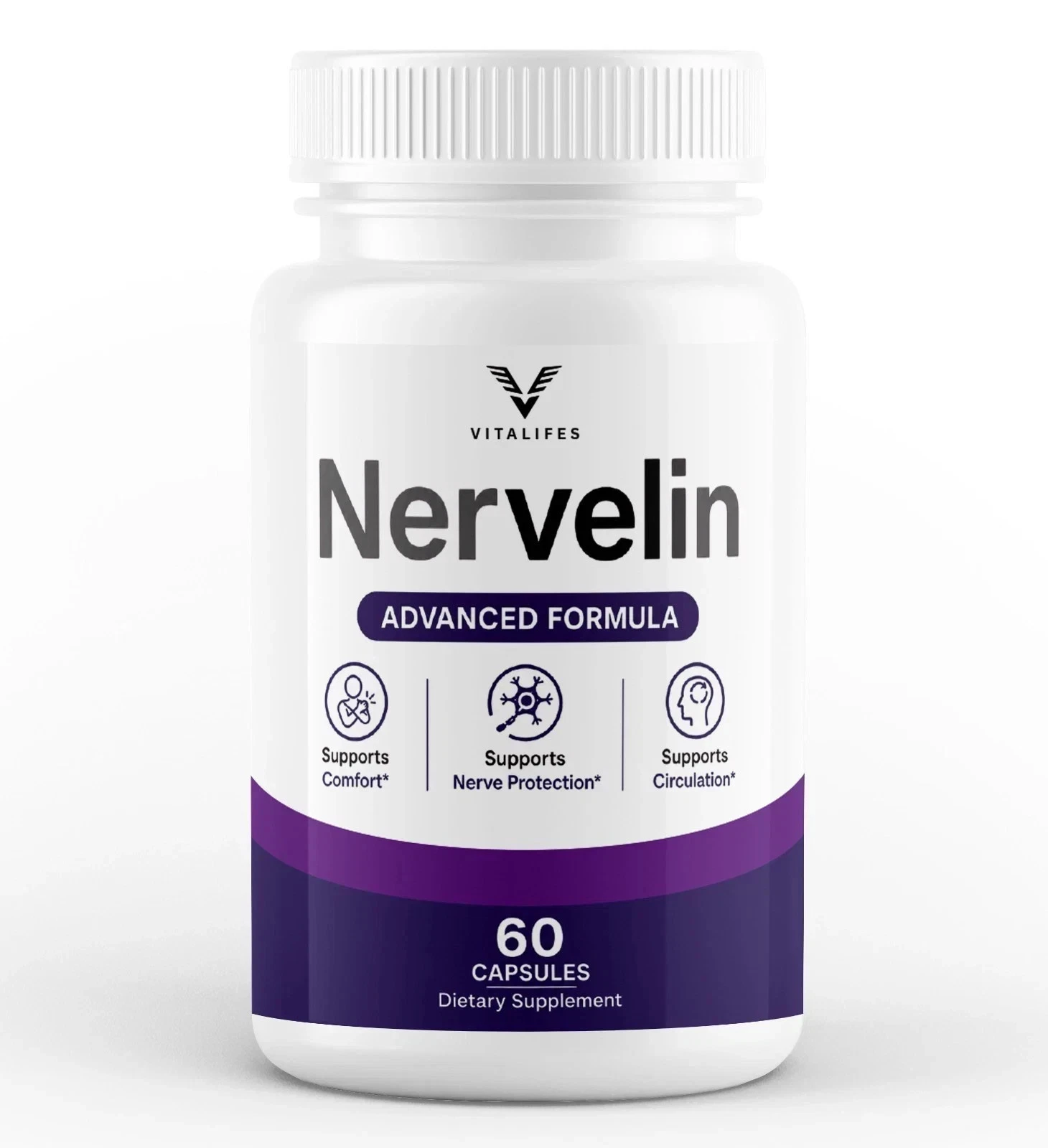
Nine ingredients named on the panel, 60 capsules a bottle, and the price and the return window both printed at the checkout you order through.
Two capsules a day · 60 capsules a bottle · price at the marketplace checkout
Order Nervelin On The Official WebsiteLot NER-26/GE-1959 · marketplace return window · gelatin capsule