Nervelin Official Website › Blog › Gelatin Or HPMC
Gelatin Or HPMC: The Capsule Shell Choice Behind Every Blend
The nine ingredients on this panel sit inside a two-piece gelatin capsule, and the shell itself is a manufacturing decision with a real pharmaceutical-sciences literature behind it — not a detail this label invented, and not one unique to this product. A 2010 review in the Journal of Pharmacy and Pharmaceutical Sciences lays out why gelatin has dominated capsule manufacturing for decades, why a plant-derived alternative exists, and what each choice actually trades away.
- This panel's other-ingredients line names gelatin capsule, rice powder and magnesium stearate vegetable grade.
- Gelatin, made from animal collagen, has been the standard hard-capsule shell material for close to a century because of how reliably it forms, seals and dissolves.
- Hydroxypropyl methylcellulose (HPMC), a plant-derived cellulose polymer, is the main alternative and is reviewed in depth in a 2010 pharmaceutical-sciences paper.
- The two shells are not simply interchangeable: HPMC trades some of gelatin's manufacturing convenience for a shell suitable for vegetarian, vegan, halal and kosher use.
- This bottle's shell is gelatin, which is why this website states plainly elsewhere that it is not suitable for a vegetarian or vegan diet.
What this panel's other-ingredients line actually says
Beneath the nine-ingredient blend, this panel prints three additional lines, exactly as they appear on the bottle: gelatin capsule, rice powder, magnesium stearate vegetable grade. The supplement facts page sets out what each of those three does inside the capsule — the shell itself, a fill-weight agent, and a flow agent for the manufacturing line. This page is about the first of those three specifically, because it is the one line that decides who can take this product at all, and because the choice behind it is more interesting, and better documented in the research, than a single word on a label suggests.
Why gelatin became the standard shell
Gelatin is a protein derived from the collagen in animal skin, bone and connective tissue, most commonly bovine or porcine in commercial production. It has been the dominant material for hard two-piece capsules since the format was industrialised in the early twentieth century, and it remains dominant today for reasons that are mechanical rather than cosmetic: gelatin forms a strong, consistent film when processed into a shell, it seals reliably around a powder or blend fill, it dissolves predictably in the stomach at body temperature, and the manufacturing process for it is well established across the global supply chain, which keeps it inexpensive relative to alternatives.
None of that is unique to this product. Gelatin capsules are the default across a large share of the dietary supplement and pharmaceutical capsule market, and a bottle using one is following the industry's most common practice rather than making an unusual choice.
HPMC, the plant-derived alternative, and its 2010 review
The main alternative is hydroxypropyl methylcellulose, generally abbreviated HPMC, a cellulose-derived polymer sourced from plant material rather than animal collagen. A 2010 paper in the Journal of Pharmacy and Pharmaceutical Sciences, titled “HPMC capsules: current status and future prospects,” reviews the material in detail: how it is manufactured, how its performance compares to gelatin, and where the industry had reached as of that review.
The paper describes HPMC capsules as having closed much of the performance gap with gelatin over the years the technology has existed, while noting genuine remaining differences in areas like moisture content, brittleness under certain storage conditions, and manufacturing cost, which has historically run higher for HPMC than for gelatin at comparable scale. It frames HPMC as a maturing, viable alternative rather than a finished replacement, which is a more careful verdict than either “identical” or “inferior.”
It does not say HPMC is required, safer, or the industry standard. It documents HPMC as an alternative with real trade-offs, adopted by manufacturers who have a specific reason — usually a vegetarian, vegan, halal or kosher market — to move away from gelatin, not as a universal upgrade every capsule should make.
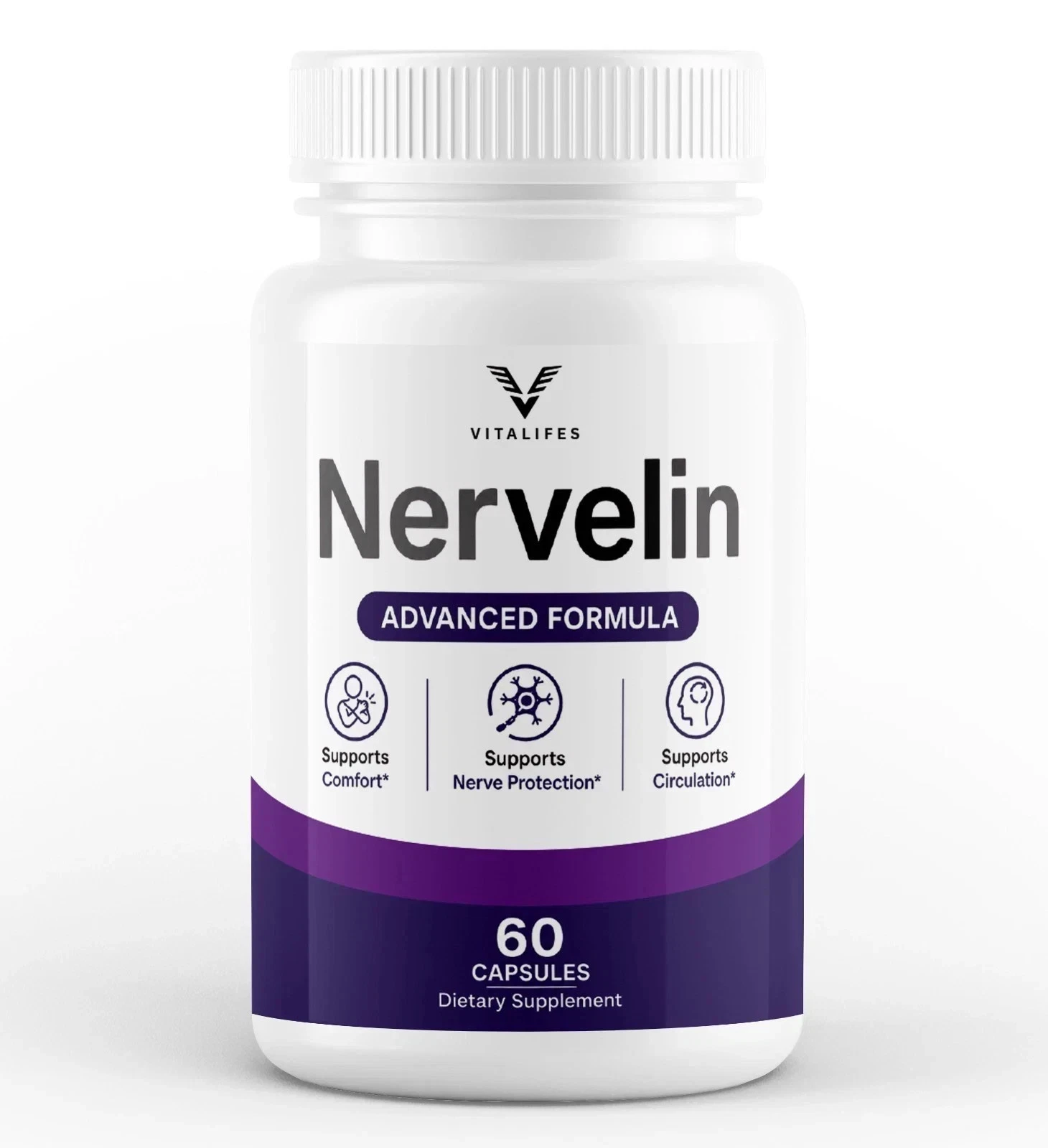
Nervelin: nine names, each beside the dose its own research used
The ingredients page sets every one of the nine against the condition it was actually studied in, so you can see what this label is and is not carrying.
Two capsules a day · 60 capsules a bottle · price at the marketplace checkout
Order Nervelin On The Official WebsiteLot NER-26/GE-1959 · marketplace return window · gelatin capsule
What each shell trades away
| Gelatin | HPMC | |
|---|---|---|
| Source | Animal collagen, typically bovine or porcine | Plant-derived cellulose |
| Suitable for vegetarian/vegan diets | No | Yes |
| Halal/kosher without separate certification | Depends on sourcing and certification, not assumed | Generally simpler to certify |
| Manufacturing cost, historically | Lower, well-established supply chain | Higher, though the gap has narrowed |
| Moisture content and brittleness | Well-characterised over a century of use | Documented differences the 2010 review discusses directly |
Neither column is a strictly better shell. Each is a different set of trade-offs, and the 2010 review's contribution is documenting them rather than declaring a winner.
Why a manufacturer picks one over the other
The most common reason a brand switches to HPMC is a specific audience it wants to serve without exception: a fully vegetarian or vegan product line, or a formal halal or kosher claim that a gelatin shell would complicate or rule out outright. Cost and manufacturing familiarity, by contrast, generally favor staying with gelatin, which is why gelatin remains the default across most of the supplement aisle rather than the exception.
Neither reason is about the ingredients inside the capsule. A gelatin shell and an HPMC shell can carry an identical blend fill; the shell choice is a separate manufacturing and market decision layered on top of whatever is printed in the ingredients panel above it.
What this means for this specific bottle
This panel's other-ingredients line states gelatin capsule, and that line is not in question: it is what the label prints, and this website reports it as printed. The practical consequence follows directly from the material itself, not from any judgment about the manufacturer's choice: a capsule made from animal collagen is not suitable for a vegetarian or vegan diet, and no halal or kosher assurance ships with this specific product, a point the who-it's-for page states plainly for anyone deciding whether to buy.
What this page adds to that plain statement is the manufacturing context behind it: gelatin is not an unusual or corner-cutting choice for a supplement capsule, it is the industry default for reasons the 2010 review documents in detail, and an HPMC version would have been a specific, additional decision the manufacturer did not make for this product.
Questions worth asking of any capsule shell
- Does the other-ingredients line name the shell material directly? This one does — gelatin capsule, printed plainly.
- Is a vegetarian, vegan, halal or kosher claim made anywhere on the front of the pack? If the shell is gelatin, that claim should not appear, and on this bottle it does not.
- Is the source species of the gelatin specified? This label does not specify bovine versus porcine, which is common but worth checking for anyone with a specific dietary restriction tied to source species.
- If HPMC is claimed, is it backed by a specific certification rather than an unsupported label word? The 2010 review notes that HPMC adoption is usually paired with an explicit certification precisely because the claim matters enough to buyers to need one.
Can a shell be identified by looking at the capsule itself
Not reliably, which is part of why the printed other-ingredients line matters more than appearance. Gelatin and HPMC capsules are manufactured to look extremely similar once filled and closed — both come in the same range of colours, both form a two-piece shell with a cap and a body, and both are opaque or translucent depending on the formulation rather than the shell material. A buyer holding two supplement bottles side by side, one gelatin and one HPMC, is very unlikely to be able to tell them apart without either testing the material or reading what the label states.
There are rough physical differences a trained eye or a manufacturing technician might notice — HPMC capsules tend to be slightly more brittle in low-humidity conditions and slightly more resistant to moisture absorption than gelatin, both points the 2010 review discusses as part of its performance comparison — but neither difference is something an ordinary consumer can use as a reliable test. The label is the only practical source of truth here, which is exactly why this panel printing “gelatin capsule” in plain text, rather than leaving the shell material unstated, is worth crediting even while the rest of this page explains what that choice means for who can take the product.
What a halal or kosher certification actually adds
A vegetarian or vegan claim is a statement about ingredients: no animal-derived material anywhere in the product. Halal and kosher are narrower and more procedural — they concern not only what the ingredients are but how they were sourced, processed and handled, verified by a recognised certifying body rather than asserted by the manufacturer alone. A plant-derived HPMC shell removes the specific animal-sourcing question a gelatin shell raises, but it does not by itself constitute a halal or kosher certification; that still requires a certifying body's own review of the full production chain, not just the shell material.
This bottle carries neither an HPMC shell nor a halal or kosher certification mark anywhere on its packaging, which is consistent rather than contradictory: a gelatin-shell product with no such certification is exactly what a reader should expect to see together, and this panel does not present the mismatched combination of an animal-derived shell alongside a halal or kosher claim it could not support.
- The gelatin shell on this bottle is a real, documented manufacturing choice with a century of pharmaceutical-sciences literature behind it, not an oversight or a cut corner.
- HPMC exists as a plant-derived alternative and is reviewed in detail in a 2010 paper, which frames it as a viable but genuinely different option rather than a strict upgrade.
- The choice between them is about who can take the product, not about what is inside it — the same nine-ingredient blend could ship in either shell.
- On this bottle specifically, the shell is gelatin, which rules the product out for a vegetarian or vegan diet regardless of anything else on the panel.
None of this changes the nine-ingredient panel discussed throughout the rest of this site's coverage; it sits underneath it, literally, as the container those nine names travel in. A reader who has already decided the blend itself is worth investigating still has this separate, earlier question to answer first, because no amount of research behind an ingredient changes what its shell is made of.
References
- Al-Tabakha MM. HPMC capsules: current status and future prospects. J Pharm Pharm Sci. 2010;13(3):428-442. PMID 21092714. https://pubmed.ncbi.nlm.nih.gov/21092714/
- Dietary Supplements: What You Need to Know. Office of Dietary Supplements, National Institutes of Health. https://ods.od.nih.gov/factsheets/WYNTK-Consumer/