Nervelin Official Website › Blog › Bitter Melon And The Blood Sugar Trials
Bitter Melon And The Blood Sugar Trials: What Fuangchan And Cochrane Found
Bitter Melon Extract is eighth of nine names on this panel, and it is the last ingredient on the label with a real body of controlled human research behind it: not nerve symptoms, but blood glucose in people already living with type 2 diabetes. One trial put it head to head against a prescription drug. A Cochrane review then pooled it with everything else that had been tried and called the field too inconsistent to draw a firm conclusion from. Both documents are worth reading before this row means anything.
- A 2011 randomized trial in newly diagnosed type 2 diabetes patients compared bitter melon fruit directly against metformin.
- A 2012 Cochrane systematic review pooled the bitter melon trials that existed and found the evidence insufficient to recommend it for glycemic control.
- Both documents used dried fruit or fruit-derived preparations taken daily over weeks to months, not a single-serving effect.
- Bitter Melon Extract is eighth of nine names on this panel, giving it a ceiling of about 125 mg of the 1,000 mg blend and no printed floor.
- The research is metabolic, not neurological, and this website makes no nerve claim for this row.
Where bitter melon sits in this blend, and what that sets
This panel prints one figure, “Test Boost Proprietary Blend 1000mg”, above nine ingredient names in descending order by weight. Bitter Melon Extract is eighth of nine, which under the same labeling rule covered on this site’s blend-order piece gives it a ceiling of roughly 125 mg — one-eighth of the total, the most it could possibly weigh given seven heavier names above it. The floor, if all nine were split evenly, is the same figure every row on this panel shares: about 111 mg. Bitter melon’s own range is therefore narrow and low on this particular label, whatever its research says.
That research turns out to be more substantial than most of the other rows on this panel. Bitter melon (Momordica charantia) has been tested directly against a prescription diabetes drug and reviewed systematically by Cochrane, which puts it in a small group of ingredients on this label with anything resembling a rigorous evidence trail.
The 2011 trial against metformin
The clearest single document is a 2011 randomized controlled trial published in the Journal of Ethnopharmacology, titled “Hypoglycemic effect of bitter melon compared with metformin in newly diagnosed type 2 diabetes patients.” It enrolled people who had just been diagnosed with type 2 diabetes and had not yet started treatment, then randomized them to either bitter melon or metformin, the first-line prescription drug for the condition, and tracked fasting and post-meal blood glucose over the following weeks.
The result was a real but modest glucose-lowering effect from bitter melon, smaller than the effect seen with metformin at the doses compared. That is a genuinely informative design: rather than testing bitter melon against a placebo, which answers only “does it do anything,” this trial asked how it stacks up against a drug already known to work, which is a harder and more useful question.
It does not mean bitter melon did nothing. It means the glucose-lowering effect was real but did not match the prescription comparator at the doses used in this trial. A supplement outperforming a placebo and a supplement matching a first-line drug are two very different claims, and only the first is what this trial actually supports.
The 2012 Cochrane review
The Cochrane Library published a systematic review in 2012, an update of an earlier 2010 version, titled “Momordica charantia for type 2 diabetes mellitus.” It pooled every controlled trial that existed on bitter melon and glycemic control, the 2011 metformin trial among them, and weighed them against each other the way Cochrane reviews are built to do.
The review’s verdict was cautious. The trials it found varied in preparation, dose and duration, and the pooled evidence was judged insufficient to draw a firm conclusion about whether bitter melon meaningfully improves glycemic control. That is a more conservative reading than the single 2011 trial on its own, and it is the more authoritative one, because a systematic review exists specifically to correct for the risk of one favorable trial looking better in isolation than the full evidence base supports.
Put next to each other, the two documents tell a consistent story: a real signal in at least one well-designed head-to-head trial, and a systematic review that found the field as a whole too inconsistent to convert that signal into a confident recommendation.
Why bitter melon was tested for this at all
Bitter melon contains several compounds researchers have proposed as active in glucose metabolism, including charantin, vicine and a peptide called polypeptide-p that has structural similarities to insulin. The Cochrane review and the broader literature it drew on describe multiple candidate mechanisms rather than one confirmed pathway, and none of them has been isolated as the single explanation for the effect seen in trials like the 2011 one.
As with any proposed mechanism, this explains why researchers thought the plant was worth testing, not what the testing itself found. The two documents above are what carry the actual evidence; the mechanism story is the reason the 2011 trial got funded in the first place.
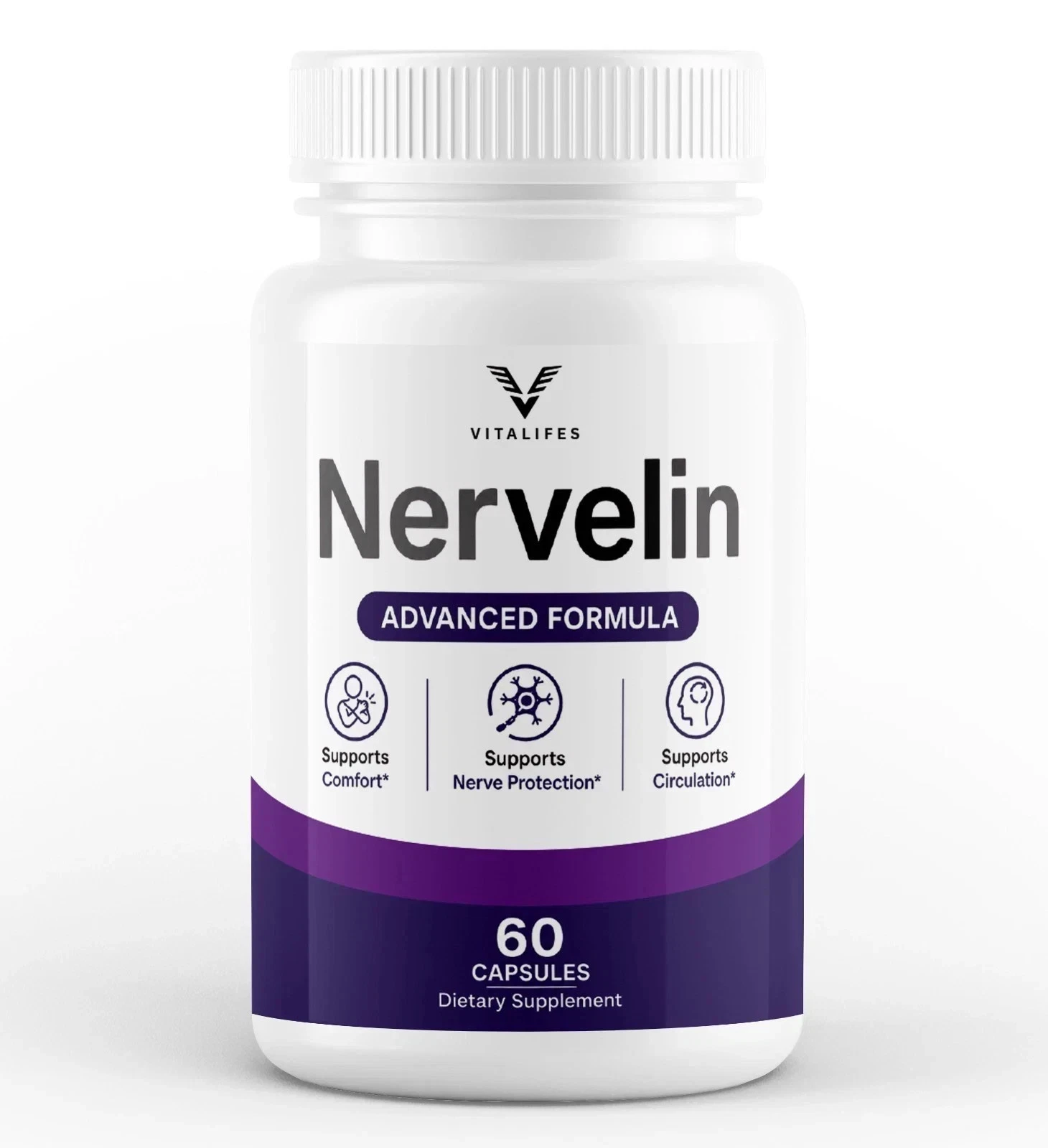
Nervelin: nine names, each beside the dose its own research used
The ingredients page sets every one of the nine against the condition it was actually studied in, so you can see what this label is and is not carrying.
Two capsules a day · 60 capsules a bottle · price at the marketplace checkout
Order Nervelin On The Official WebsiteLot NER-26/GE-1959 · marketplace return window · gelatin capsule
What "bitter melon" means as a trial ingredient
Both documents above worked with preparations of the dried fruit or fruit-derived extract, taken daily over a period of weeks, not a raw vegetable eaten occasionally or a single-serving effect. That distinction matters for reading a capsule label the same way it mattered for the cinnamon and apple cider vinegar rows covered elsewhere on this site: a trial dose measured as a defined daily preparation, over a defined number of weeks, is not automatically the same thing as an unspecified share of a shared 1,000 mg blend taken as part of a nine-ingredient capsule.
Neither the 2011 trial nor the Cochrane review specifies a single milligram figure that applies universally, because trial preparations of bitter melon vary in how concentrated the extract is. That variability is itself one of the reasons Cochrane gave for its cautious verdict: trials using different preparations at different strengths are difficult to pool into one confident number.
Reading this panel against both papers
| What the literature discusses | What a label needs to show it | What this panel shows |
|---|---|---|
| A defined daily preparation, tracked over weeks against a comparator | A bitter melon weight on the panel, on its own line | No individual weight — ceiling about 125 mg, floor about 111 mg |
| A real but modest effect versus a first-line drug in one trial | Confidence the field agrees on a benefit | Cochrane’s own 2012 verdict was insufficient evidence to conclude |
| Preparation strength varying trial to trial | A stated extract type or concentration | “Bitter Melon Extract” only, no ratio or standardisation printed |
Eighth of nine is a low ceiling on this specific panel. It does not diminish what the 2011 trial found; it only limits how much of that trial’s preparation this particular capsule could plausibly be delivering.
Being eighth on the list is the least favorable position on this panel apart from last, and it still leaves the true amount unpublished. The ingredients page sets all nine names beside what each was actually studied in, the same way this page does for bitter melon.
The nerve question, answered honestly
A reader who arrived here from a nerve-comfort carton deserves the direct answer: neither the 2011 trial nor the Cochrane review measured nerve conduction, sensory thresholds or any endpoint a neurologist would recognise as a nerve outcome. Both were built around glycemic control in people with type 2 diabetes.
There is an indirect connection worth stating rather than assuming: poorly controlled blood sugar over years is a well-established driver of diabetic peripheral neuropathy, so an ingredient that genuinely improves glycemic control could plausibly matter for nerve health downstream, the same reasoning covered for apple cider vinegar on this site’s ingredients page. That is a longer, indirect chain than “bitter melon treats nerve symptoms,” and neither document tested the direct claim.
What this does and does not mean for anyone on medication
The 2011 trial is worth flagging for a specific practical reason: it demonstrated a real glucose-lowering effect large enough to be measured against metformin. That is precisely the profile of an ingredient that can matter for someone already taking a diabetes medication, because two glucose-lowering agents taken together, prescription and botanical, are not automatically additive in a way that is safe without medical supervision.
This is not a claim that this capsule, at its unpublished share of a 1,000 mg blend, poses that risk at whatever dose it actually delivers. It is a reason anyone managing diabetes with medication has a conversation worth having with whoever prescribes for them before adding this or any other bitter-melon-containing product, independent of what any label states.
A traditional food and remedy, tested as neither here
Bitter melon has a long history as both a food and a traditional remedy across South and Southeast Asian, African and Caribbean cuisines and medicine systems, generally consumed as a cooked vegetable or a brewed preparation rather than as a concentrated capsule extract. That long history of dietary use is a separate fact from the clinical evidence discussed above, and it is worth keeping the two apart: traditional culinary and folk use establishes a record of the plant being eaten, not a controlled measurement of what a standardized extract does at a defined dose against a defined outcome. The 2011 trial and the Cochrane review are what actually tested the glucose-lowering question in a way that can be checked and reproduced; the traditional-use history is context, not evidence for this panel's blend.
This distinction matters specifically for a proprietary blend capsule, because “Bitter Melon Extract” on a modern supplement label is a manufactured concentrate, not the cooked vegetable a traditional preparation would use, and the two forms are not obviously equivalent in what they deliver per gram even before the blend-order ceiling discussed above is factored in.
- Bitter melon is one of the few ingredients on this panel tested directly against a prescription comparator, and the result was a real, if smaller, effect.
- The systematic review that followed found the wider evidence base too inconsistent for a confident recommendation.
- Eighth of nine by weight gives this row a ceiling of about 125 mg on this specific panel, with no floor above the shared 111 mg baseline.
- The research is metabolic, not neurological, and anyone on glucose-lowering medication should raise this ingredient with a clinician before adding it.
References
- Fuangchan A, Sonthisombat P, Seubnukarn T, et al. Hypoglycemic effect of bitter melon compared with metformin in newly diagnosed type 2 diabetes patients. J Ethnopharmacol. 2011;134(2):422-428. PMID 21211558. https://pubmed.ncbi.nlm.nih.gov/21211558/
- Ooi CP, Yassin Z, Hamid TA. Momordica charantia for type 2 diabetes mellitus. Cochrane Database Syst Rev. 2012;2012(8):CD007845. PMID 22895968. https://pubmed.ncbi.nlm.nih.gov/22895968/