Nervelin Official Website › Blog › L-Lysine And Cold Sores
L-Lysine And Cold Sores: What The Trials Found
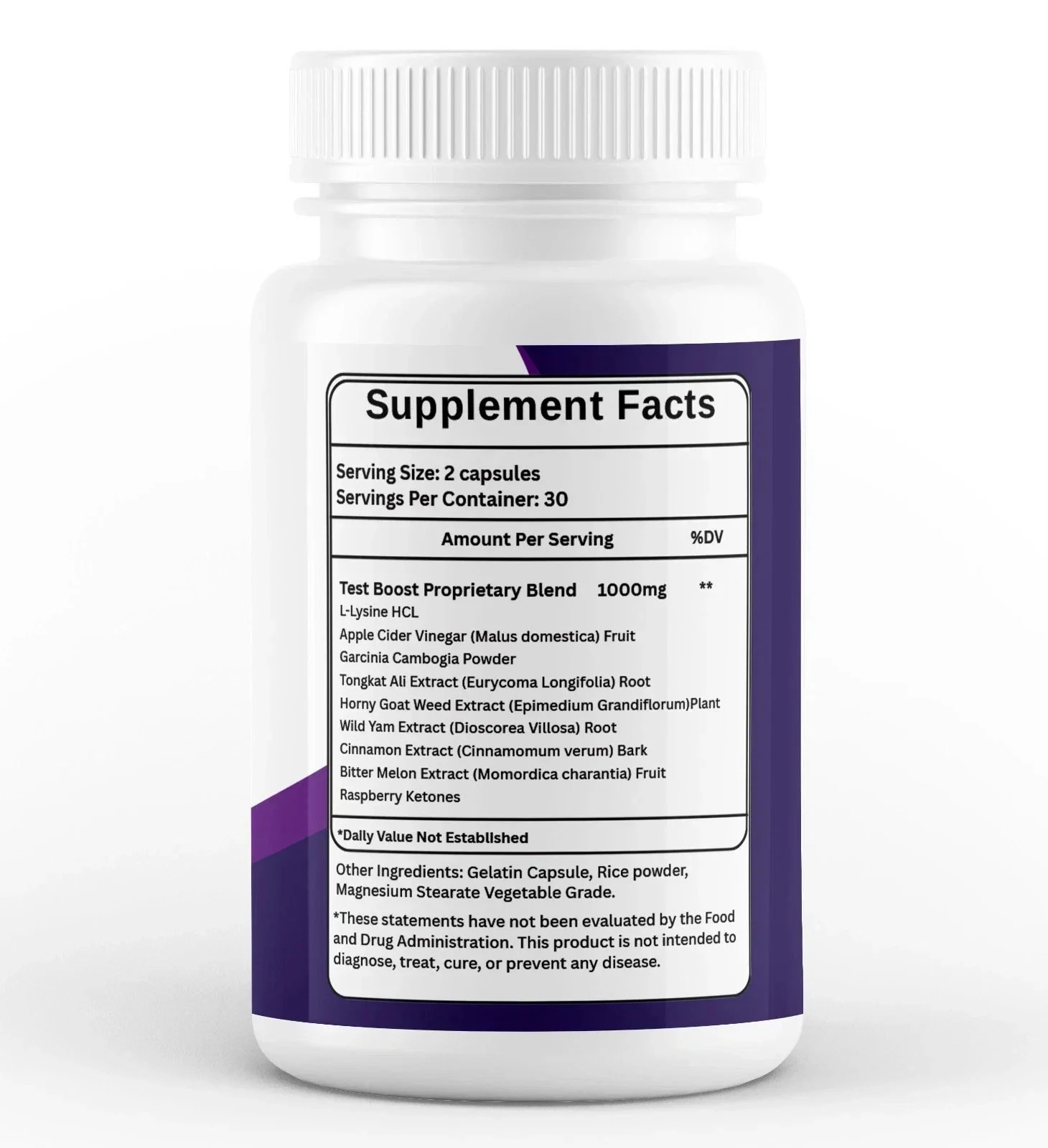
L-lysine is the first name on this panel's nine-ingredient blend, which under the labeling rule this network has covered before makes it the single largest ingredient inside the 1,000 mg total. It is also the one ingredient on this label with a real body of human trials behind a specific claim: cold sores. The trials do not agree with each other, and that disagreement is worth reading in full before any bottle enters the conversation.
- L-lysine is listed first on this panel, so by blend order it is the largest single ingredient in the 1,000 mg total — a ceiling of 1,000 mg, a floor of about 111 mg if all nine shared it evenly.
- A 1984 controlled trial found lysine failed to prevent recurrence at a modest dose.
- A 2015 Cochrane review of cold sore prevention found the lysine evidence too weak to draw a conclusion from.
- A 2017 review of the same literature reached a similarly cautious verdict, while noting doses in the 1,000 mg range appeared in some of the more promising smaller trials.
- This panel does not print a milligram figure for lysine on its own, so none of those doses can be confirmed against it.
Where lysine sits in this blend, and what that sets
This panel prints one figure, "Test Boost Proprietary Blend 1000mg", above nine ingredient names in descending order by weight. L-lysine HCL is the first name on that list, which means by the same labeling rule covered on this site's blend-order piece, it is the single heaviest ingredient in the group. Its ceiling is the entire 1,000 mg; its floor, if all nine were split evenly, is about 111 mg. Somewhere in that range sits the true amount, and the label does not say where.
That range matters because lysine is unusual among this panel's nine names: it has an actual body of controlled human trials attached to one specific, testable claim — reducing the frequency or severity of recurrent herpes labialis, the medical name for cold sores.
The 1984 trial that found it did not work
The earliest controlled look at this question is a 1984 trial published in the Archives of Dermatology, titled plainly "Failure of lysine in frequently recurrent herpes simplex infection." It tested lysine for both treatment and prevention in people with frequent recurrences and reported that it did not reduce how often outbreaks happened or how severe they were.
This is the paper worth reading first precisely because it is the negative result. A field with only positive trials attached to a popular ingredient is usually a field that has not been looked at carefully enough; a negative result from four decades ago sitting alongside later, more mixed findings is a more honest starting point than skipping straight to a favorable headline.
The 2015 Cochrane review
The Cochrane Library published a systematic review in 2015 titled "Interventions for prevention of herpes simplex labialis (cold sores on the lips)," covering every intervention with trial evidence behind it, lysine included. Cochrane reviews exist to weigh trials against each other rather than to elevate the most favorable one, which is exactly the discipline this question needs given the 1984 result above.
The review's treatment of oral lysine for prevention was cautious: the trial evidence available did not meet the bar for a confident recommendation either way, largely because the individual studies were small, used different doses and different definitions of "recurrence," and were not consistent enough to pool into one clear answer.
It does not mean lysine was tested and found not to work. It means the trials that exist are too few, too small, or too inconsistent with each other to support a confident conclusion in either direction. That is a different, more honest statement than either "proven" or "disproven."
The 2017 review, and where it landed
A 2017 paper in Integrative Medicine, titled "Lysine for Herpes Simplex Prophylaxis: A Review of the Evidence," revisited the same body of research two years after the Cochrane review. It reached a broadly similar note of caution, while pointing out that some of the smaller trials showing a modest benefit for prevention used daily doses in the range of roughly 1,000 mg a day, taken continuously rather than only during an outbreak.
Put next to each other, the three papers tell a consistent story: one negative trial at an unspecified modest dose, a systematic review that found the field too thin to draw a firm conclusion from, and a later review noting that the more encouraging individual results tended to cluster around gram-level daily doses taken as ongoing prevention rather than acute treatment.
Why lysine was proposed for this at all
The theory behind lysine and cold sores is older than any of the three papers above, and both later reviews describe it the same way: the herpes simplex virus needs the amino acid arginine to replicate efficiently, and lysine is structurally similar enough to arginine that raising lysine intake relative to arginine intake was proposed to interfere with that process. This is sometimes called the lysine-arginine antagonism theory.
It is a plausible mechanism, not a proven one. A plausible mechanism explains why researchers thought lysine was worth testing in the first place; it does not, on its own, tell you whether the effect shows up reliably in real people taking a real capsule. That is exactly why the trials above matter more than the theory does — the theory has been around since before the 1984 negative trial, and forty years of testing has not resolved it either way.
One practical detail the theory does support: any effect it has would come from the ratio between lysine and arginine intake, not from lysine alone in isolation. Foods relatively high in arginine — nuts, chocolate, and gelatin among them — are sometimes suggested as things to moderate alongside a lysine supplement, though that advice itself has not been tested with the same rigor as lysine dosing.
What "high-dose" means across this literature
Across the cold sore prevention literature broadly, doses discussed range from around 500 mg to 3,000 mg of L-lysine a day, usually as an ongoing daily habit rather than a response to symptoms already showing. The reviews above did not converge on one number, but the doses that came up most often in the more favorable smaller trials sat at or above 1,000 mg daily.
| Source | What it looked at | Dose discussed | Verdict |
|---|---|---|---|
| 1984, Archives of Dermatology | Treatment and prevention, frequent recurrence | Not specified as high-dose | No benefit found |
| 2015, Cochrane | Systematic review, prevention | Varied across pooled trials | Evidence too weak to conclude |
| 2017, Integrative Medicine | Narrative review of the same field | Around 1,000 mg/day in more favorable trials | Cautious, dose-dependent signal noted |
Three sources, no agreement on a confirmed effective dose, but a repeated theme: when a benefit showed up at all, it tended to be at gram-level daily intake, not a fraction of a gram.
Nervelin: nine names, each beside the dose its own research used
The ingredients page sets every one of the nine against the condition it was actually studied in, so you can see what this label is and is not carrying.
Two capsules a day · 60 capsules a bottle · price at the marketplace checkout
Order Nervelin On The Official WebsiteLot NER-26/GE-1959 · marketplace return window · gelatin capsule
What this does and does not mean for an active outbreak
Everything above concerns prevention, taken as an ongoing daily habit, which is the framing the trials themselves used. None of the three papers tested lysine as a treatment for a cold sore already in progress, and none of them compared it against an antiviral medication, which remains the treatment with the strongest evidence base for shortening or managing an active outbreak.
That distinction matters for anyone weighing this ingredient against a supplement label rather than against a prescription. A daily lysine habit, at whatever amount this blend actually contains, is not tested as and should not be substituted for antiviral treatment once an outbreak has already started. Anyone with frequent, severe, or unusually persistent outbreaks has a conversation worth having with a clinician, independent of what any supplement label says.
Reading this panel against the three papers
Now the comparison this article exists to make. This panel names L-lysine HCL first in a 1,000 mg blend of nine ingredients, with no milligram figure printed for lysine on its own.
| What the literature discusses | What a label needs to show it | What this panel shows |
|---|---|---|
| Doses commonly in the 1,000–3,000 mg/day range for prevention | A lysine weight on the panel, on its own line | No individual weight — ceiling 1,000 mg, floor about 111 mg |
| Ongoing daily use, not occasional | A stated daily serving matching the studied pattern | Two capsules daily is this panel's own instruction, but the lysine amount inside it is unknown |
| A consistent conclusion across trials | Confidence that the ingredient is well-established | Cochrane's own 2015 verdict was "too weak to conclude" |
The blend-order ceiling puts lysine's maximum possible amount within the range the more favorable trials discussed. It does not put it there — a ceiling is the most the amount could be, not what it is.
Being first on this list is the most favorable position a name can hold under blend-order labeling, and it still leaves the true amount unknown. It is also worth being precise about what "first" does and does not establish: it confirms lysine outweighs the other eight names in this specific 1,000 mg blend, nothing more. It says nothing about how that amount compares to a trial dose taken from a different, single-ingredient product measured against a placebo. The ingredients page sets all nine names beside what each was actually studied in, the same way this one does for lysine.
- Lysine is the one ingredient on this panel with a real, if mixed, body of controlled human trials behind a specific claim.
- The trials disagree with each other, and the most recent systematic review called the evidence too weak to draw a firm conclusion from.
- Where a benefit did show up in smaller trials, it tended to cluster around 1,000 mg a day or more, taken as an ongoing habit.
- Being listed first sets the most favorable possible ceiling on this panel, and the true amount is still not published.
References
- DiGiovanna JJ, Blank H. Failure of lysine in frequently recurrent herpes simplex infection. Treatment and prophylaxis. Arch Dermatol. 1984;120(1):48-51. PMID 6419679. https://pubmed.ncbi.nlm.nih.gov/6419679/
- Chi CC, Wang SH, Delamere FM, et al. Interventions for prevention of herpes simplex labialis (cold sores on the lips). Cochrane Database Syst Rev. 2015;2015(8):CD010095. PMID 26252373. https://pubmed.ncbi.nlm.nih.gov/26252373/
- Mailoo VJ, Rampes S. Lysine for Herpes Simplex Prophylaxis: A Review of the Evidence. Integr Med (Encinitas). 2017;16(3):42-46. PMID 30881246. https://pubmed.ncbi.nlm.nih.gov/30881246/