Nervelin Official Website › Blog › Why Ingredients Are Listed By Weight
Why Ingredients Have To Be Listed By Weight: The Rule Behind Blend Order
Every calculation this website makes about “ceiling” and “floor” figures for this panel's nine ingredients rests on one federal labeling requirement that is rarely named out loud: a proprietary blend must list its components in descending order by weight. That rule is not a courtesy the manufacturer extended. It is a legal requirement, and a 2018 study of FDA warning letters shows what regulators actually do when a label breaks it.
- U.S. federal regulation requires dietary supplement ingredients to be listed in descending order of predominance by weight.
- A proprietary blend is allowed to hide individual amounts behind one combined total, but the descending-order requirement still applies to the sequence of names.
- This is the entire legal basis for every "ceiling" figure this website calculates for this panel's nine rows.
- A 2018 JAMA Network Open study of FDA warning letters shows the kind of labeling failure regulators actually pursue, and where blend-order violations fit into that picture.
- The rule protects a narrow fact — the ranking — and nothing about amount, purity or effect.
The rule itself, stated plainly
Dietary supplement labeling in the United States is governed by FDA regulations under the Federal Food, Drug, and Cosmetic Act, and the specific requirement covering ingredient sequencing on a Supplement Facts panel calls for ingredients to be listed in descending order of predominance by weight. A proprietary blend — a group of ingredients declared under one combined heading and one combined weight, exactly as this panel's “Test Boost Proprietary Blend 1000mg” is declared — is permitted to withhold the individual amount of each component. It is not permitted to list those components in any order it likes. The sequence has to reflect actual weight, heaviest first.
That single requirement is the entire legal foundation behind every blend-order calculation this website makes. When the blend-arithmetic piece on this site says L-Lysine's ceiling is the full 1,000 mg and Raspberry Ketones' ceiling is roughly 111 mg, that arithmetic works only because the law requires the printed order to track real weight. Remove that requirement and the order on any label would be meaningless marketing copy.
Why the rule exists at all
A proprietary blend total, on its own, tells a reader almost nothing about any single ingredient inside it. Nine names sharing 1,000 mg could in principle be split any way at all — 900 mg for the first name and a token amount for the other eight, or something close to even across all nine. Without a sequencing rule, a manufacturer could list the cheapest, least-researched ingredient first purely for marketing reasons, regardless of how much of it the blend actually contained, and a reader would have no way to tell.
The descending-order requirement closes that specific gap, and only that gap. It does not require disclosure of amounts. It requires that whatever order the label uses correspond to the real ranking by weight, which converts an otherwise meaningless list into one piece of genuine, checkable information: which ingredient this blend contains the most of, which the least, and everything in between.
What descending order actually buys a reader
On this panel specifically, it buys the ceiling-and-floor arithmetic this site uses throughout its ingredient coverage. The first name, L-Lysine HCL, cannot weigh more than the entire blend total, which sets its ceiling at 1,000 mg. The last name, Raspberry Ketones, cannot weigh less than an equal one-ninth share if every row were identical, which sets the shared floor at roughly 111 mg for all nine. Every ingredient in between inherits a ceiling equal to the total divided by its position, because it cannot outweigh any name listed above it.
That is a real, legally grounded fact about this bottle, not a guess. It exists because the FDA regulation requires it to be true, and a label that got the order wrong would be making a false statement of fact on a federally regulated document, not merely an unhelpful one.
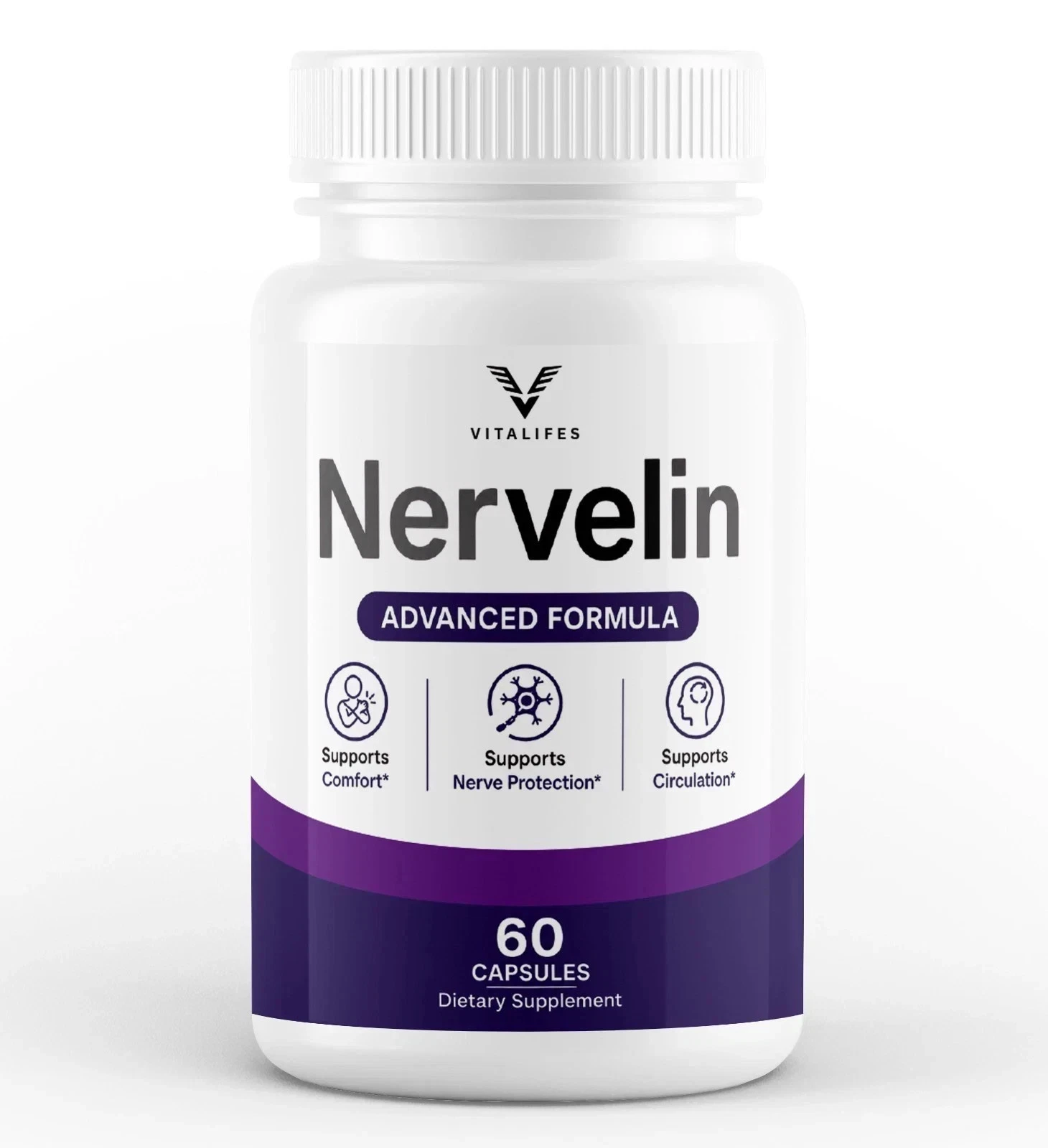
Nervelin: nine names, each beside the dose its own research used
The ingredients page sets every one of the nine against the condition it was actually studied in, so you can see what this label is and is not carrying.
Two capsules a day · 60 capsules a bottle · price at the marketplace checkout
Order Nervelin On The Official WebsiteLot NER-26/GE-1959 · marketplace return window · gelatin capsule
What descending order does not establish
The rule says nothing about how much of a gap separates one row from the next. The first and second names could be nearly identical in weight, or the first could dwarf the second by a factor of ten; descending order is satisfied either way. It says nothing about purity, sourcing, or whether an ingredient is present in a form and concentration that matches the dose used in any published trial. And it says nothing at all about whether the blend as a whole does what the product name or marketing implies.
This is the same limit covered from a different angle in this site's piece on reading a proprietary blend label as a document: the rule this page describes explains why the order can be trusted as a ranking. It does not explain, and was never meant to explain, what any individual amount actually is.
What FDA warning letters show about enforcement
A 2018 study published in JAMA Network Open, “Unapproved Pharmaceutical Ingredients Included in Dietary Supplements Associated With US Food and Drug Administration Warnings,” examined a decade of FDA warning letters issued to supplement makers. Its focus was broader than blend-order sequencing specifically — it catalogued cases where products were found to contain undeclared pharmaceutical drug ingredients hidden inside what were marketed as natural supplement blends, most commonly in weight-loss, sexual-enhancement and muscle-building categories.
What that study makes concrete is the kind of labeling failure regulators actually pursue with warning letters: not primarily a technical sequencing error inside an otherwise honest blend, but products where the ingredient list itself misrepresented what was in the capsule, sometimes seriously enough to include drug compounds never disclosed at all. Descending-order violations are a smaller, more technical category by comparison, but they sit on the same spectrum — a label's ingredient list is a legal statement of fact, and the 2018 findings are a reminder that regulators do act when that statement turns out to be false, in ways ranging from a wrong sequence to an undisclosed drug.
This website has not tested this product's contents and makes no claim about whether the printed order or the printed blend total is accurate. What this page establishes is the legal requirement the label is obligated to meet, and the kind of scrutiny that requirement exists under.
Applying the rule to this panel
| Position | Ingredient | Ceiling under the descending-order rule |
|---|---|---|
| 1 | L-Lysine HCL | 1,000 mg |
| 2 | Apple Cider Vinegar Fruit | 500 mg |
| 3 | Garcinia Cambogia Powder | 333 mg |
| 4 | Tongkat Ali Extract | 250 mg |
| 5 | Horny Goat Weed Extract | 200 mg |
| 6 | Wild Yam Extract | 166 mg |
| 7 | Cinnamon Extract | 142 mg |
| 8 | Bitter Melon Extract | 125 mg |
| 9 | Raspberry Ketones | 111 mg (shared floor) |
Every figure in the right-hand column exists because of the single federal requirement this page describes. Remove it, and this table would be arithmetic performed on a label with no legal obligation to mean anything.
Why "the rule was followed" is not the same as "trust the blend"
It is worth separating two different questions that are easy to blur together. The first is whether this label meets its legal disclosure obligation — a combined total, ingredients in descending weight order, no individual amounts required. The second is whether that obligation, once met, gives a buyer enough information to evaluate the product against the published research for each ingredient. This page answers the first question. The rest of this site's ingredient coverage exists because the answer to the second question is no: a legally compliant blend label and a label a reader can fully evaluate against clinical research are not the same document, and the gap between them is the reason every ingredient page on this site states a ceiling rather than an amount.
Where the rule itself comes from
The descending-order-by-weight requirement is not specific to dietary supplements; it descends from the same general principle that governs ingredient lists on conventional food packaging under federal law, where a cereal box or a jar of sauce has always had to list its contents heaviest-first. When Congress passed the Dietary Supplement Health and Education Act in 1994, it established supplements as their own regulatory category, separate from both food additives and drugs, but it carried forward the same ingredient-sequencing logic food labels had already used for decades, adapting it into the Supplement Facts panel format familiar from any bottle on this shelf. The proprietary blend allowance — permitting one combined weight instead of individual amounts — is a narrower carve-out layered on top of that older sequencing rule, not a replacement for it.
That history matters for one reason: the rule this page describes is not a supplement-industry invention designed to look transparent while disclosing little. It is an older piece of food-labeling law, repurposed, and the proprietary blend exception is the part of the system supplement makers specifically lobbied for and were granted, while the underlying sequencing requirement stayed in place around it.
What a genuinely non-compliant blend label would look like
Since this rule is a real legal requirement rather than a voluntary courtesy, it is worth being concrete about what a violation of it would actually look like, if a reader ever encountered one. A non-compliant label would print a proprietary blend's ingredients in an order that does not track real weight — for instance, placing an inexpensive filler ingredient first, ahead of a more expensive and more heavily dosed active ingredient, to imply a formula the product does not actually contain. Because the true underlying weights are not independently printed on the label itself, this kind of violation is not something a reader can catch by inspection alone; it typically surfaces only through laboratory testing of the finished product, which is the same gap this site's separate piece on lot codes and certificates of analysis explores from a different angle.
This panel does not show any internal sign of that specific problem — nothing about its printed order is self-contradictory, and this website has no laboratory basis to allege that the order is false. What can be said with confidence is narrower: the order is either accurate, in which case the ceiling figures throughout this site's coverage hold, or it is not, in which case the label carries a legal defect this website has no way to detect from the printed page alone.
- Descending order by weight is a specific, real, federally required disclosure, not a stylistic convention.
- It is the entire basis for every ceiling and floor figure this site calculates for this panel's nine rows.
- It says nothing about amount, purity, sourcing or effect, and was never intended to.
- A 2018 study of FDA warning letters shows regulators do act on false ingredient-list statements, from sequencing errors to undisclosed drug ingredients, when labels misrepresent contents.
References
- Tucker J, Fischer T, Upjohn L, Mazzera D, Kumar M. Unapproved Pharmaceutical Ingredients Included in Dietary Supplements Associated With US Food and Drug Administration Warnings. JAMA Netw Open. 2018;1(6):e183337. PMID 30646238. https://pubmed.ncbi.nlm.nih.gov/30646238/
- Code of Federal Regulations, Title 21, Section 101.36 (Nutrition labeling of dietary supplements). U.S. Food and Drug Administration. https://www.ecfr.gov/current/title-21/chapter-I/subchapter-B/part-101/subpart-A/section-101.36
- Questions and Answers on Dietary Supplements. U.S. Food and Drug Administration. https://www.fda.gov/food/information-consumers-using-dietary-supplements/questions-and-answers-dietary-supplements