Nervelin Official Website › Blog › Apple Cider Vinegar And The Enamel Question: What The Erosion Studies Show
Apple Cider Vinegar And The Enamel Question: What The Erosion Studies Show
Apple Cider Vinegar Fruit is second of nine names on this panel, and it carries a real, documented safety literature that has nothing to do with whether it helps with anything: dental erosion and esophageal injury from repeated or prolonged acid contact. A Dutch case report, a U.S. tablet-injury case report, and a laboratory study that measured the erosion directly all point the same direction. None of it is a nerve-health finding, and this page says so plainly before going through what each document actually measured.
- Apple cider vinegar has a documented dental-erosion and esophageal-injury literature, separate from any efficacy claim.
- A 2012 case report and a 2014 in-vitro microprobe study both measured mechanism-based enamel mineral loss from vinegar exposure.
- A 2005 case report specifically implicated the tablet route, the same general delivery form as this capsule.
- Second of nine by weight gives this row a ceiling of about 500 mg on this panel, with a shared floor of about 111 mg.
- None of the three documents measured a nerve-health outcome, and this site makes no nerve claim for this row.
Where apple cider vinegar sits in this blend, and what that sets
Apple Cider Vinegar (Malus domestica) Fruit is second of nine names on this panel, one row below L-Lysine HCL. Under the labeling rule covered in this site’s blend-order piece, second position gives it a mathematical ceiling of roughly 500 mg of the shared 1,000 mg total — the most it could weigh if it and the first row split the blend evenly between them and the other seven names carried almost nothing. The floor is the same figure every row on this panel shares if all nine were weighted equally: about 111 mg. Nothing on the panel narrows that range further, because a proprietary blend is not required to print a per-ingredient amount, only the total and the descending order.
Apple cider vinegar is also one of the few rows on this label with a real safety literature attached to it, separate from whether it does anything useful. That literature is not about the stomach or the pancreas, the organs most vinegar research focuses on. It is about the mouth and the esophagus, and it exists because vinegar is an acid, and repeated contact between an acid and a tooth or a soft tissue is a mechanical and chemical question dentistry has studied directly.
A documented case: enamel loss from a weight-loss habit
In 2012, two Dutch researchers at the University of Amsterdam’s dental academic center, published a case report in Nederlands Tijdschrift voor Tandheelkunde, the Dutch dental journal, describing a patient with measurable dental erosion linked to a self-directed weight-loss habit built around drinking apple cider vinegar. The paper’s title translates to “Unhealthy weight loss: erosion by apple cider vinegar,” and it is exactly what it sounds like — a clinical description of enamel wear traced back to sustained acid exposure from a home regimen, not a supplement capsule.
A single case report cannot establish how common this is or what dose or frequency causes it. What it does establish is that the mechanism is real and has been observed and documented in a clinical setting, which is the reason dentists ask about vinegar habits at all. It is the weakest rung of the evidence ladder, but it is not nothing, and it is consistent with everything the laboratory studies below found independently.
A separate case: esophageal injury from apple cider vinegar tablets
A different and more specific incident appears in a 2005 report in the Journal of the American Dietetic Association. A patient developed an esophageal injury after taking apple cider vinegar tablets, and the injury was traced to the tablet lodging against the esophageal lining rather than passing through quickly, which concentrated the acid’s contact time in one spot. The authors followed the case with an evaluation of commercial apple cider vinegar tablet products, checking what was actually being sold under that label.
This report matters for a capsule-based panel specifically because it is about the tablet or capsule route, not the liquid route most vinegar research covers. A capsule delivers its acid content differently than a diluted drink: swallowed with less liquid, potentially slower to dissolve, and capable of contacting one point of tissue for longer if it does not move through normally. Nervelin is a capsule, not a liquid tonic, which puts it closer to the delivery route this case describes than to the drink-based habit in the Dutch report above.
The laboratory data: an electron microprobe study across vinegar types
The clearest mechanistic evidence comes from a 2014 in-vitro study published in Clinical Laboratory, which measured dental erosion caused by several different vinegar varieties using an electron microprobe — an instrument that maps mineral loss from a tooth surface at a fine scale. The researchers exposed extracted teeth to different vinegar types under controlled conditions and measured how much surface mineral each one removed.
The finding was straightforward: vinegar, across the varieties tested, produced measurable enamel mineral loss, consistent with its acidity. This is not a surprising result chemically — vinegar’s acetic acid content puts it in a pH range that dental research generally associates with erosive potential, in the same broad category as citrus juices and carbonated soft drinks — but it is useful because it replaces a general assumption about acidity with a direct, measured comparison using real dental tissue rather than a pH meter alone.
| Document | What it measured | What it found |
|---|---|---|
| 2012 Dutch case report | A patient’s clinical dental erosion after a vinegar-drinking weight-loss habit | Erosion consistent with sustained acid exposure |
| 2005 U.S. case report | A single patient’s esophageal injury from vinegar tablets, plus a product survey | Tablet lodging concentrated acid contact and caused injury |
| 2014 in-vitro microprobe study | Direct mineral loss from extracted teeth exposed to several vinegar varieties | Measurable erosion across the vinegar types tested |
Why an acid does this, and what changes the risk
Enamel is a mineral structure that dissolves gradually on contact with anything below a certain pH, and acetic acid — vinegar’s defining component — sits acidic enough to do this with repeated or prolonged exposure. Dental researchers generally describe the risk as a function of three things: how acidic the substance is, how long it stays in contact with a tooth or tissue surface, and how often that contact happens. A brief exposure, well diluted, rinsed promptly with water, and not followed by brushing immediately afterward (brushing right after an acid exposure can abrade already-softened enamel) carries a different risk profile than an undiluted, prolonged, or frequent one.
None of the three documents above measured Nervelin specifically, and none tested a capsule taken with a full glass of water and swallowed normally, which is the ordinary way a capsule product is used. What they establish is that the ingredient itself, independent of the brand carrying it, has a documented erosive and irritant mechanism at the concentrations and routes those studies used.
A food and a folk remedy, tested here as neither
Apple cider vinegar has a long history as both a food preservative and a home remedy, used undiluted, diluted in water, or mixed with honey in traditions that predate any of the three documents above by centuries. That history establishes that people have consumed vinegar in various forms for a very long time; it does not establish what a specific concentration, taken in a specific form, does to a specific tissue, which is exactly the narrower question the case reports and the microprobe study were designed to answer. The two kinds of evidence answer different questions, and only the second kind can be checked and reproduced by another researcher.
This distinction is worth holding onto specifically because it cuts both ways. A long history of dietary use is not proof of safety at every dose and every delivery form, the point the 2005 tablet report makes directly. It is also not evidence that a capsule is dangerous; it is simply a different, older kind of information than a controlled measurement, and the three documents above are the ones that actually tested the mechanism in a way that can be verified.
Two questions a label like this one raises
A reader comparing this row against the research reasonably asks two things a proprietary blend cannot answer on its own. The first is concentration: vinegar sold for drinking is typically around 5% acetic acid, and the 2014 microprobe study tested named commercial vinegar products at their retail strength, but a dried or powdered extract inside a capsule is a different physical form, and this panel does not state what concentration or extraction ratio was used to produce “Apple Cider Vinegar (Malus domestica) Fruit” as a capsule ingredient. The second is exposure time: a capsule swallowed with water passes through the mouth in seconds, which is a meaningfully shorter contact window than a drink sipped over several minutes or a tablet left to dissolve, and none of the three documents distinguishes between these routes in a way that lets a reader assign a precise risk figure to a capsule specifically.
Neither open question changes the underlying chemistry the 2014 study measured. It means a reader cannot take that study’s exact erosion figures and apply them directly to this capsule’s unstated concentration, only the mechanism itself, which does not depend on the delivery form.
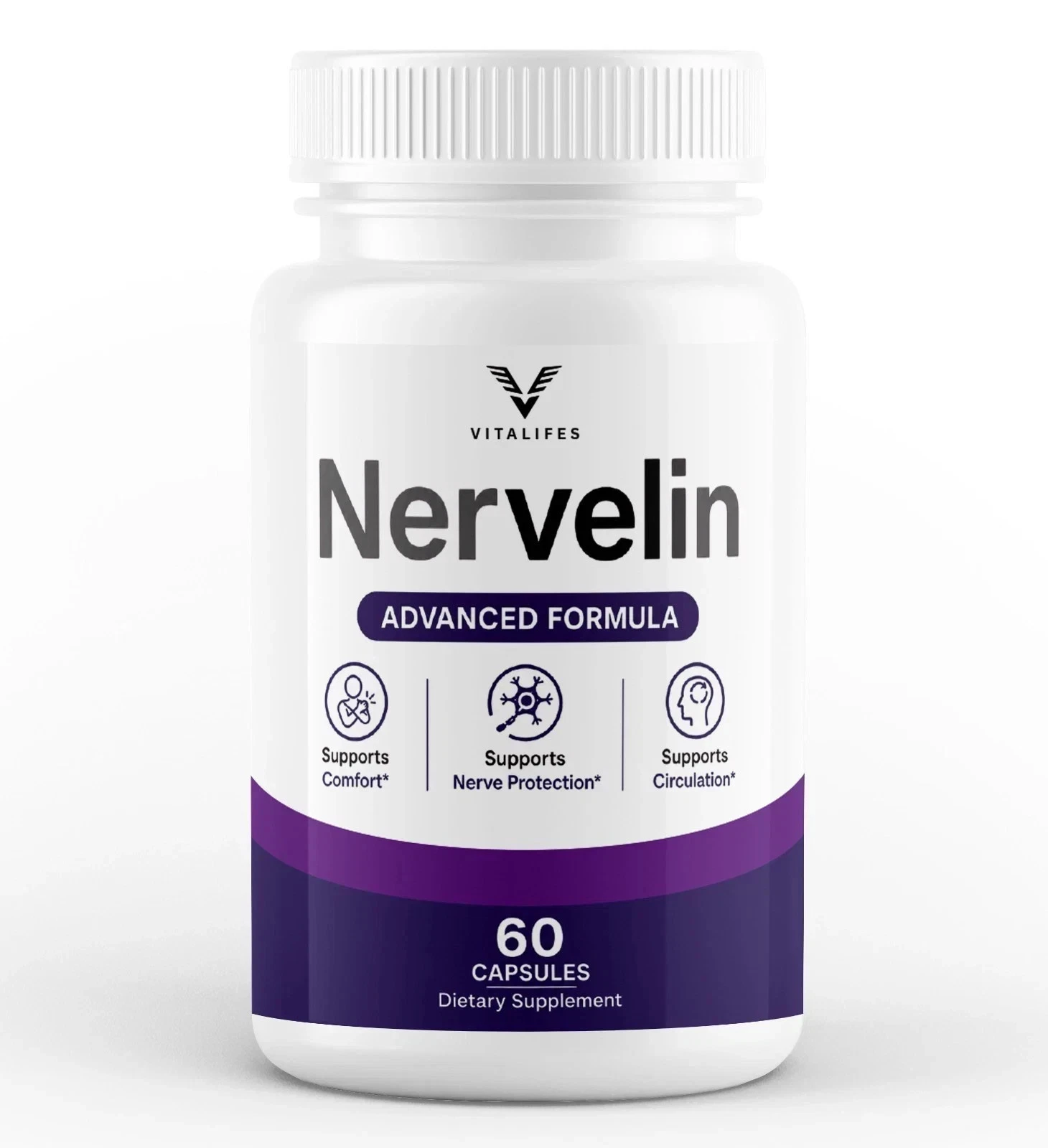
Nervelin: nine names, each beside the dose its own research used
The ingredients page sets every one of the nine against the condition it was actually studied in, so you can see what this label is and is not carrying.
Two capsules a day · 60 capsules a bottle
Order NervelinReading this panel against the three documents
“Apple Cider Vinegar (Malus domestica) Fruit” is the panel’s printed name for this row, with no percentage of acetic acid, no dilution figure, and no processing method stated. The case reports and the laboratory study above worked with defined forms — a drinking regimen in one, a specific tablet product line in another, several named commercial vinegar varieties in the third — and none of them is automatically the same preparation as whatever concentration sits inside this capsule’s roughly 111 to 500 mg range. That gap is the same one covered for other rows on this site: a research literature exists and is real, but a proprietary blend’s printed total does not let a reader match the research dose to the capsule dose.
What the gap does not do is erase the mechanism. Acetic acid at typical vinegar concentrations behaves the same way whether it arrives in a drink, a tablet, or a capsule; what changes between those forms is contact time and dilution, not the underlying chemistry the 2014 microprobe study measured directly.
The nerve question, answered honestly
None of the three documents above measured nerve conduction, sensory thresholds, or any endpoint a neurologist would recognize as a nerve-health outcome. All three are about the mouth, teeth, and esophagus. A reader who arrived at this page from a nerve-support carton deserves that stated plainly: this row’s documented research is dental and gastrointestinal, not neurological, and this site makes no nerve claim for it. What the neuropathy trials actually used covers the four ingredients — none of them on this panel — that do have controlled trials in that specific condition.
What this means in practice
The practical takeaway from all three documents is about how a vinegar-containing product is used, not whether it should be avoided. Swallowing a capsule with a full glass of water, rather than letting it dissolve slowly in the mouth or against the throat, keeps contact time short and is the pattern the 2005 tablet-injury report specifically flagged as the failure mode when it was absent. Anyone with a history of acid reflux, esophageal irritation, or dental erosion from other sources has a specific reason, grounded in these three documents, to raise this ingredient with a dentist or physician before adding a vinegar-containing capsule to a daily routine, independent of what any brand states.
This is not a claim that Nervelin’s printed dose, wherever it actually falls in that 111-to-500 mg range, has caused injury in anyone. No document above tested this product. It is a reason the underlying ingredient carries a documented, mechanism-based caution that a reader can weigh for their own circumstances, the same way the panel’s other rows are weighed elsewhere on this site.
- Apple cider vinegar has a documented dental-erosion and esophageal-injury literature, separate from any question about whether it works for anything.
- A 2012 case report and a 2014 in-vitro microprobe study both measured real, mechanism-based enamel erosion from vinegar exposure.
- A 2005 case report specifically implicated the tablet route — the same general delivery form as this capsule — through prolonged localized contact.
- Second of nine by weight gives this row a ceiling of about 500 mg on this specific panel, with a shared floor of about 111 mg, and no printed figure narrows that range.
- Swallowing a capsule with a full glass of water, rather than letting it linger, is the practical takeaway the tablet-injury report points to directly.
References
- Gambon DL, Brand HS, Veerman ECI. Unhealthy weight loss. Erosion by apple cider vinegar. Ned Tijdschr Tandheelkd. 2012;119(12):589-591. PMID 23373303. https://pubmed.ncbi.nlm.nih.gov/23373303/
- Hill LL, Woodruff LH, Foote JC, Barreto-Alcoba M. Esophageal injury by apple cider vinegar tablets and subsequent evaluation of products. J Am Diet Assoc. 2005;105(7):1141-1144. PMID 15983536. https://pubmed.ncbi.nlm.nih.gov/15983536/
- Willershausen I, Weyer V, Schulte D, et al. In vitro study on dental erosion caused by different vinegar varieties using an electron microprobe. Clin Lab. 2014;60(5):783-790. PMID 24839821. https://pubmed.ncbi.nlm.nih.gov/24839821/